Safe Procedures for High-Rise Exterior Cleaning: A Complete Guide from Personnel Qualifications to Emergency Response
High-rise exterior cleaning is a high-risk specialized operation. This article outlines requirements for certified personnel and safety briefings, rope and harness inspection and retirement criteria, wind speed limits and anchor point constraints, and quarterly rescue drill configuration across four key areas: personnel qualifications, equipment checks, on-site operations, and emergency response plans.
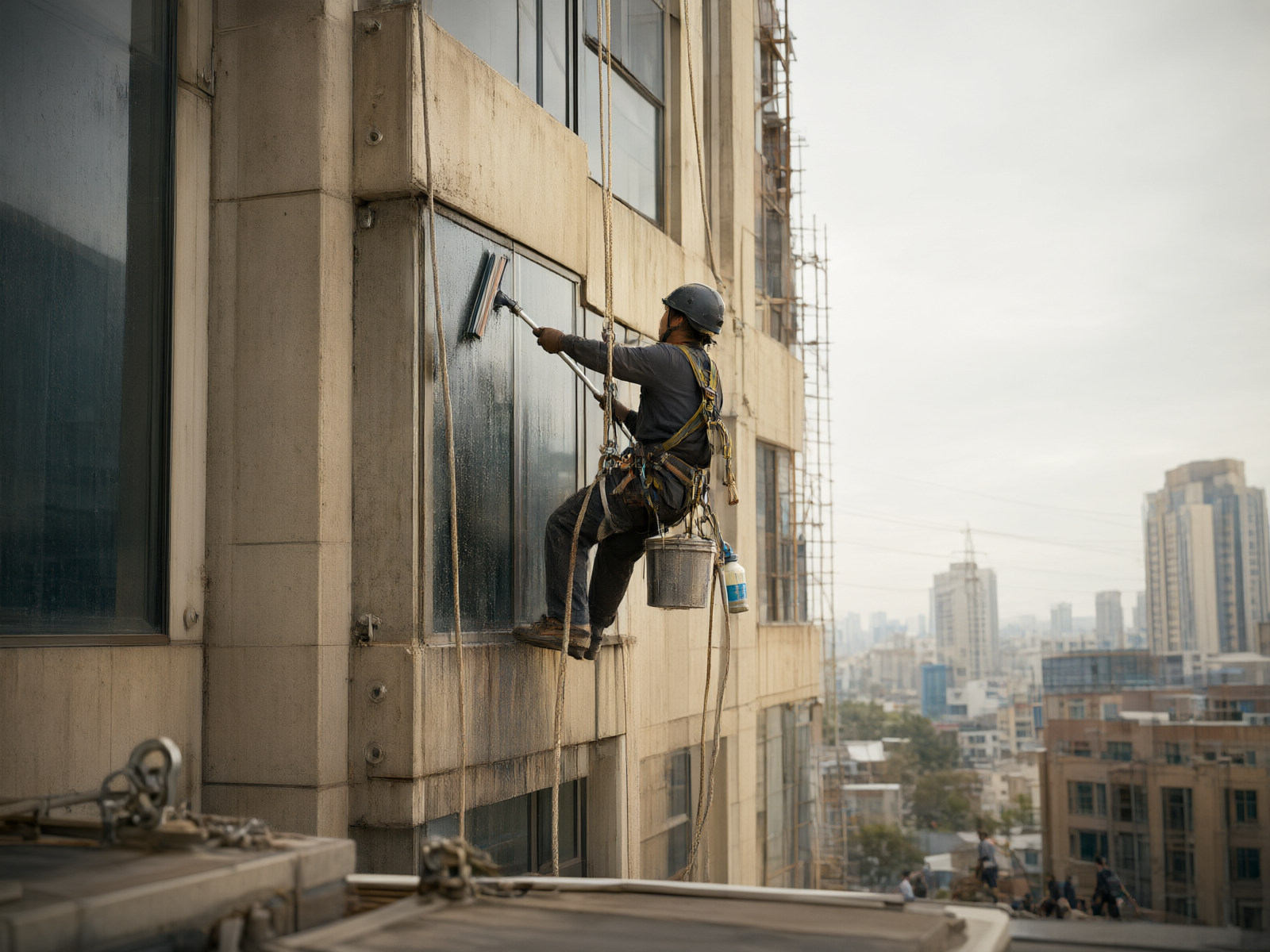
High-rise exterior cleaning is one of the highest-risk operations in the cleaning industry. Per the Ministry of Housing and Urban-Rural Development's "Classification Standard for Working at Heights," any work performed 2 meters or higher above the base level is classified as working at heights. Exterior cleaning typically occurs between 10 and 100 meters. Due to the complexity of the work environment, safety protocols must go beyond paper documents and cover four critical areas: personnel qualifications, equipment inspection, on-site operations, and emergency response, forming a closed-loop management system.
Personnel Qualifications: Holding a valid license is mandatory, not optional.
Exterior cleaning personnel must hold a "High-Altitude Operation Certificate" issued by the Emergency Management Department. This is a mandatory requirement under the "Provisions on the Safety Technology Training and Assessment of Special Operations Personnel." The certificate is valid for 6 years and requires revalidation every 3 years. Failure to renew on time is equivalent to working without a license.
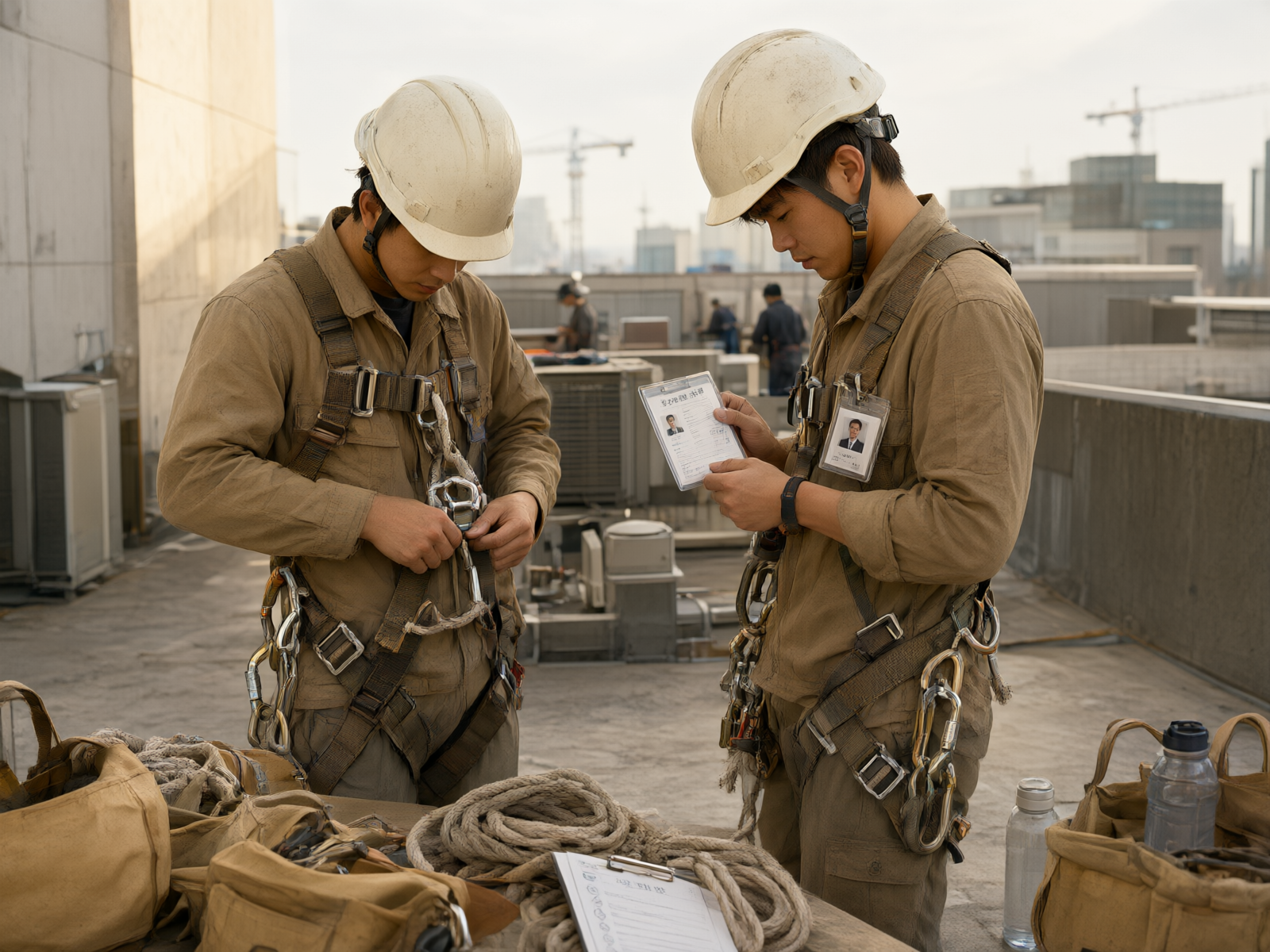
Holding a license is just the entry requirement. In practice, workers must also complete site-specific safety briefings covering the day's structural characteristics, anchor point locations, wind speed limits, and emergency evacuation routes. All personnel are required to sign the briefing record before starting work; access to the work area is prohibited without a signature.
Physical examinations are equally mandatory. Individuals with high blood pressure, heart disease, epilepsy, or acrophobia must not perform work at heights. Alcohol consumption is prohibited within 8 hours before starting work. Employees experiencing symptoms such as colds or dizziness on the day of work must report them immediately and suspend operations. While these measures incur minimal cost, they effectively eliminate the vast majority of human-related risks.
Equipment Inspection: Every Rope Must Be Traceable
Core equipment for high-rise exterior cleaning includes work ropes, safety ropes, harnesses, seat boards, connectors, and safety locks. Each piece of equipment must undergo visual inspection and functional testing before every use.
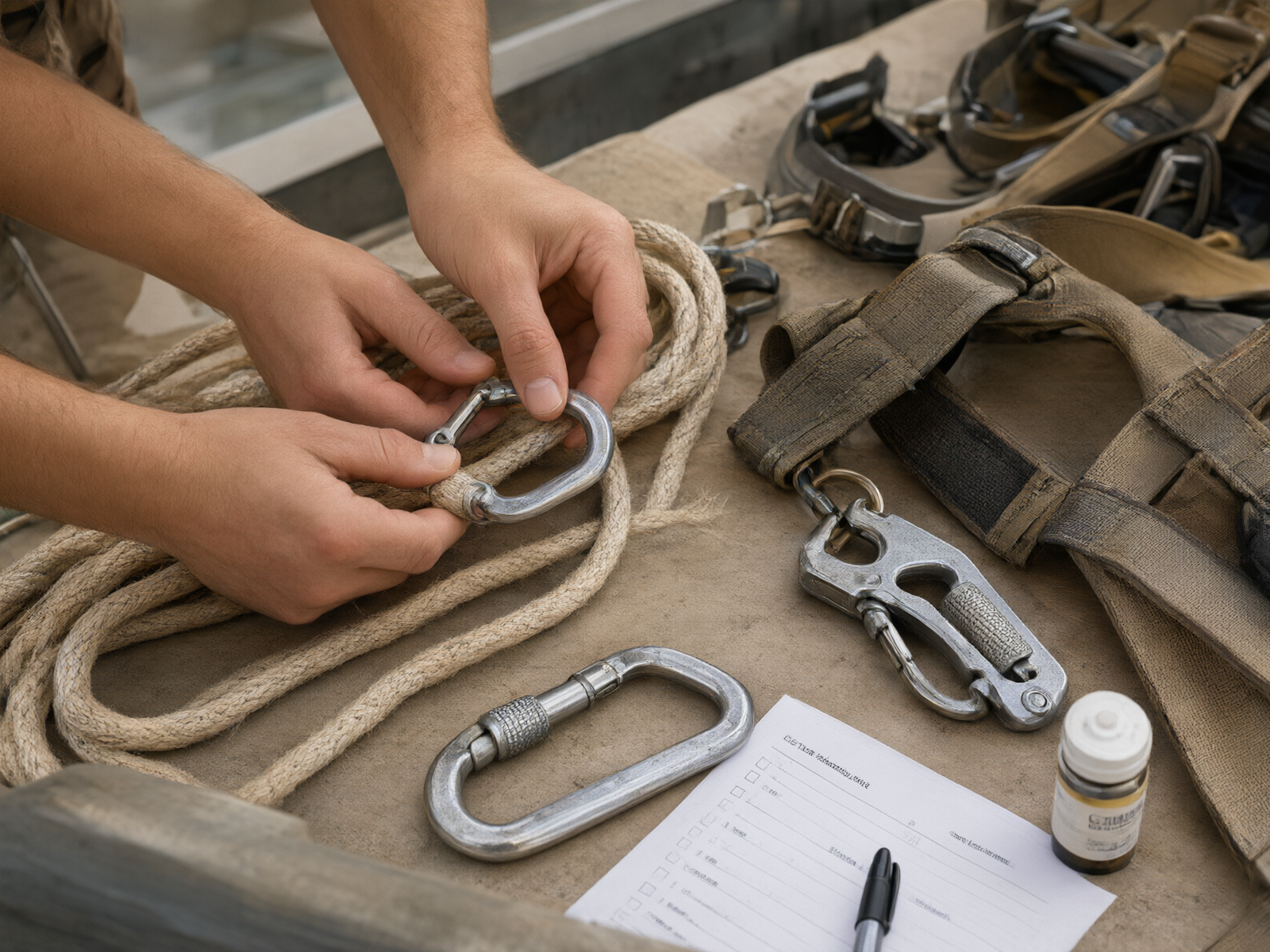
Work and safety ropes are typically made of nylon or polyester, with a diameter of at least 18 mm. Inspect for broken strands, abrasion, or burn marks on the rope, and check that knots are secure. The safety rope should be slightly shorter than the work rope to ensure it bears load first in extreme conditions. The belt width of the safety harness must be at least 40 mm; shoulder and leg straps must be free of cracks, and metal components must show no deformation or corrosion.
Connectors and safety locks are critical nodes on a lifeline. Self-locking devices must slide smoothly along the rope, with their locking function verified through simulated fall tests. Safety lock springs must snap back quickly; after engagement, manually confirm that they are fully locked.
All equipment must be logged, recording purchase date, usage count, inspection records, and disposal date. Equipment meeting disposal criteria must be replaced immediately; continued use due to cost concerns is prohibited. For example, nylon work ropes have a maximum service life of 2 years and must be decommissioned even if no visible damage is present.
On-Site Operations: Triple Constraints of Wind Speed, Anchoring, and Supervision
Weather conditions on the day of work are the primary factor in deciding whether to proceed. Exterior cleaning must be halted when wind reaches Beaufort scale 5 (wind speed 8.0-10.7 m/s) or higher. Operations are also prohibited during rain, snow, heavy fog, or thunderstorms. Some companies enforce a stricter limit of Beaufort scale 4, which is reasonable in areas with high-rise building clusters due to the channeling effect between buildings that can cause local wind speeds to significantly exceed forecasted values.
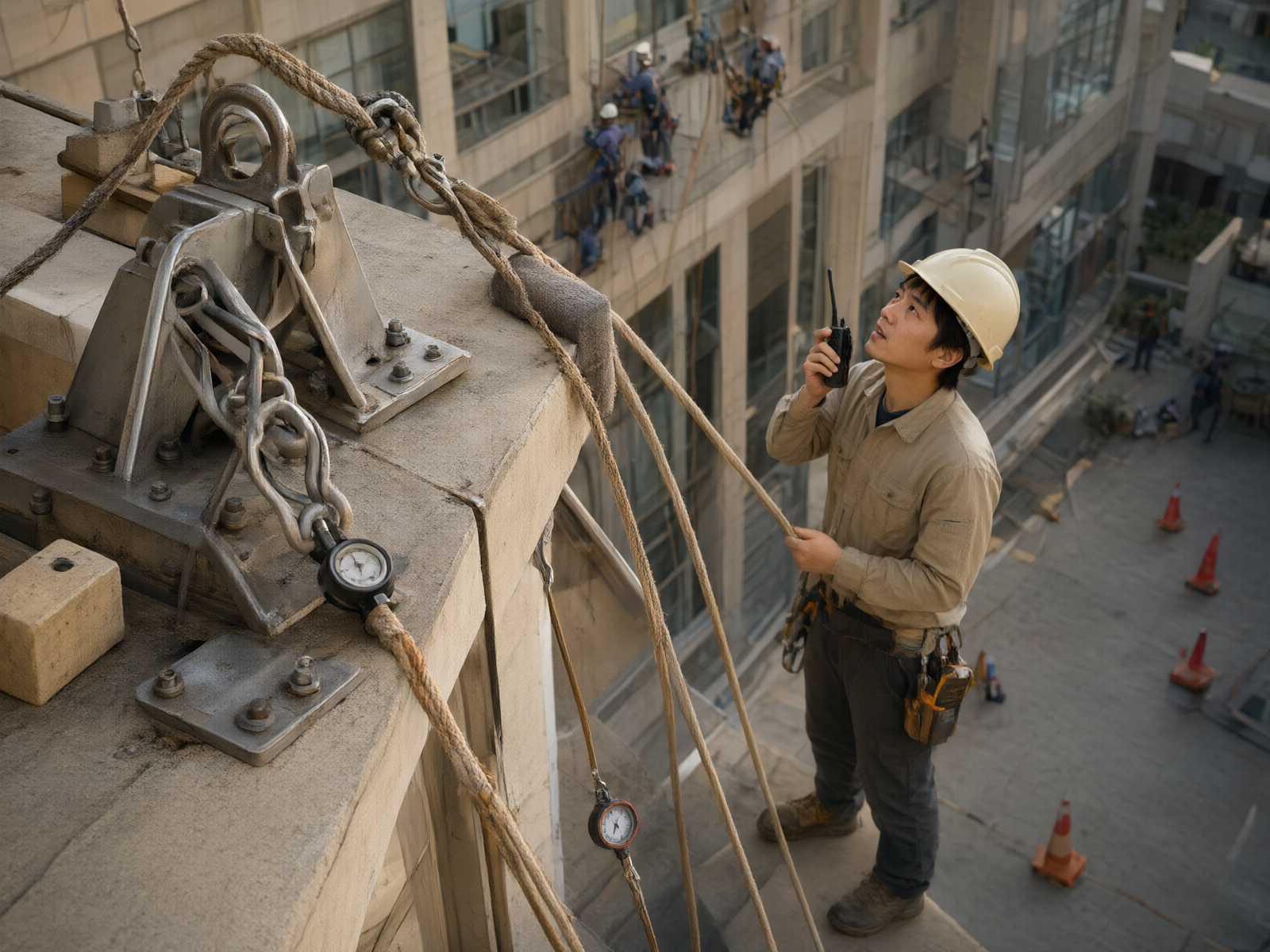
Anchor point installation is critical to fall protection system reliability. The work rope and safety rope must be secured to two independent anchor points. Anchor points must undergo structural load verification, with a minimum tensile strength of 15 kN per point. For roof-mounted ballasted anchor systems, the ballast weight must be calculated and confirmed; it may not be reduced arbitrarily.
Ground supervision is the final line of defense. The supervisor must continuously monitor personnel status and equipment operation, maintaining clear communication with workers at all times. Supervisors cannot perform other duties or leave their posts. A safety perimeter must be established below the work area to prevent unauthorized access.
Emergency Response Plans: From Paper to Muscle Memory
The value of an emergency plan lies not in textual completeness but in operational feasibility. A valid exterior cleaning emergency plan must include: on-site response procedures for fall incidents, emergency evacuation protocols for equipment failures, work stoppage criteria for sudden severe weather, and contact information for nearby medical resources.
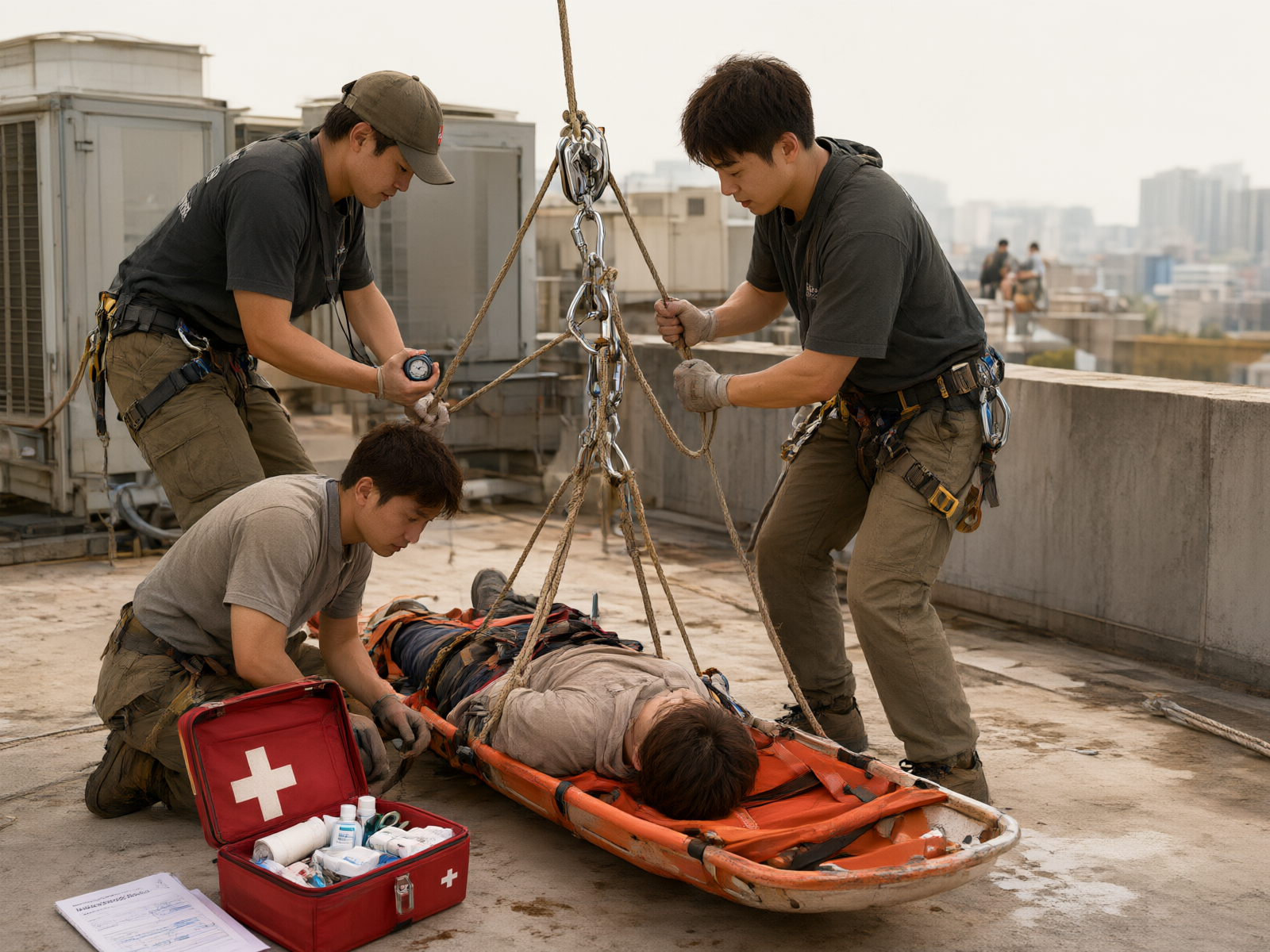
Drill frequency determines the real-world effectiveness of emergency plans. We require at least one rescue drill per quarter covering typical scenarios such as suspended personnel unconsciousness, equipment jamming, and sudden high winds. After each drill, conduct a post-event review to document response times, operational errors, and improvement actions.
Proper rescue equipment is equally critical. The work site must be equipped with a first-aid kit, stretcher, spare ropes, and cutting tools. For high-rise exterior cleaning projects, verify that fire lanes are clear and that rescue vehicles can reach the building base within 10 minutes.
Conclusion
There are no shortcuts to safety management for exterior wall cleaning. Personnel qualifications address "who can do it," equipment inspections cover "what tools to use," on-site operations explain "how to do it," and emergency plans prepare for "what to do if something goes wrong." All four elements are essential; a lapse in any one could lead to irreversible consequences. For building owners, verifying a service provider's safety management records is more meaningful than comparing quotes.
Key Data
- Certificate validity: 6 years. Re-certification required every 3 years. Failure to re-certify before expiration is equivalent to working without a license.
- Do not consume alcohol within 8 hours before starting work. Personnel experiencing symptoms such as colds or dizziness on the day of work must report them immediately and suspend operations.
About the Author
Zhao Qiang Aerial Work Team Leader
- Work at Heights Certificate (Special Operation)
- Aerial work platform operation 9 years
- On-site Supervisor for Exterior Cleaning Project: 60+
Responsible for on-site safety management and labor hour estimation for exterior wall cleaning and engineering janitorial services. This section of the safety guidelines has been reviewed by them.
Data Definition:Price range and labor hours on this page are based on actual settlement records from YuanYou Cleaning during the same period, calculated by building area or actual hours worked. Excludes holiday surcharges and transportation fees exceeding 30 km. Final quote subject to written estimate after on-site inspection.Statistics Interval2024 to 12, 1-2025, samples from26Actual work records of registered cleaning staff.