12-item acceptance checklist for glass cleaning: Expanded area 6-10 CNY/sqm. How to verify item-by-item for no watermarks or scratches.
The two most debated aspects of glass cleaning are how to calculate the area and how to judge cleanliness. This article breaks down the calculation method for 6-10 yuan/m² of expanded surface area, the 3 verification steps for glass window frames within the 12-item acceptance checklist, as well as water quality management, drying techniques, and particle control behind streak-free and scratch-free results. It also includes a reusable verification sequence.
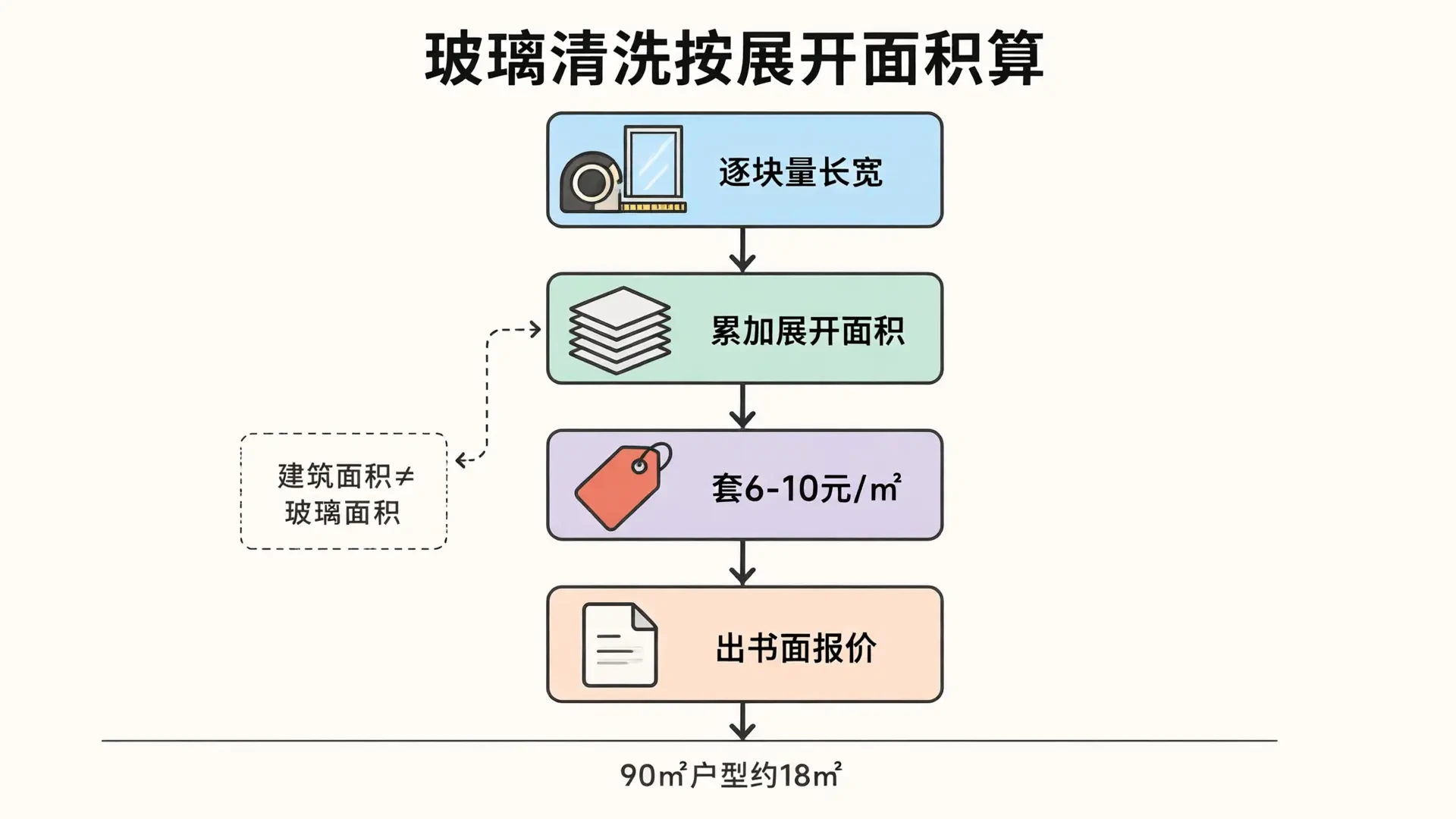
Glass cleaning is the most contentious item in cleaning services. Disputes rarely hinge on "whether it was wiped," but rather on two issues: how to calculate the area and how to judge cleanliness. The former determines the bill; the latter decides whether rework is needed. We break down 3 of the 12 acceptance checklist items for glass frames, detail each verification step, and clarify the expanded area metric ranging from 6 to 10 yuan/m².
1. Expandable area is the basis for pricing, not floor area.
Glass cleaning is priced by the total expanded surface area, calculated as length × width for each visible glass pane. Window frames, walls, and sills are excluded. For a two-bedroom apartment with 90 sqm of floor area, the total glass expansion area typically ranges around 18 sqm, which aligns with our actual settlement records from 2024 to 2025: cleaning fees for a 90 sqm unit were approximately 108-180 yuan, falling within the 6-10 yuan/sqm range.
Using floor area as a proxy for glass area is the most common quoting error. A 120㎡ home may have an expanded glass area of only 22㎡ or up to 35㎡. Floor-to-ceiling windows, bay windows, and enclosed balconies significantly increase the expanded area, while older sliding windows in smaller units tend to be lower.
6-10 yuan/sqm is a price range, not a fixed rate. Where you land within it depends on four variables.
| Variable | Low-End (Approx. $6 per sqm) | High-End (Approx. $10 per sqm) |
| --- | --- | --- |
| Glass Type | Clear Float, Single Pane | Insulating, Coated, Frosted, Art Glass |
| Contamination Type | Dust, Rain Streaks | Cement Spots, Paint Splatters, Adhesive Residue, Oil Film |
| Service Scope | Glass Only | Includes Frame, Track, and Screen |
| Work Conditions | Indoor Windows, Standard Ceiling Height | Exterior Windows, High-Rise, Requires Suspended Platform or Safety Rope |
The quote must specify the measured gross area, unit price, whether it includes both sides, inclusion of window frames, tracks, and screens, as well as add-ons and exclusions. Our three-stage pricing method begins with a precise area measurement: we provide free on-site laser measurement for commercial and engineering projects, with an error margin within 2%. Next, we classify based on pollution levels, then issue a formal written quote.
2. The glass window frame accounts for only 3 of the 12 items.
The 12-item acceptance checklist consists of three groups: 5 items for kitchens and bathrooms, 3 items for glass windows and frames, and 4 items for floors and wall corners. The glass cleaning portion covers the middle 3 items, meaning double-sided clarity without scratches, clean window tracks free of dust, and spotless screens with no surface dust.
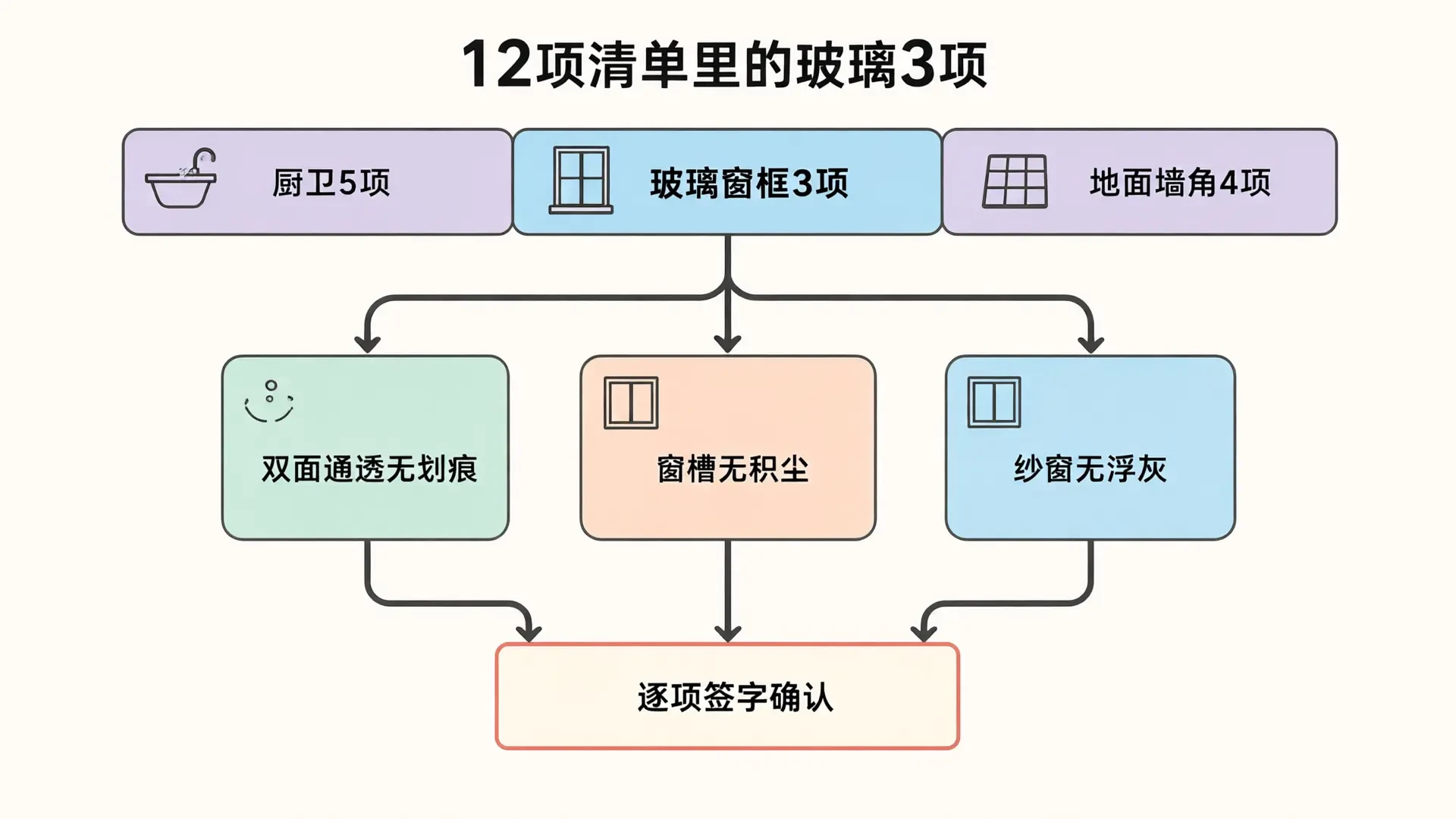
There's a common point of confusion: "Glass free of water marks" is not a standalone item in the checklist. Water mark verification falls under "Double-sided clarity." Separately, "Mirror free of water marks" belongs to the Kitchen & Bath group and applies to bathroom mirrors, not window glass. Mixing these two items during inspection can lead to errors like "the mirror is clean, but water marks remain on the windows."
3 items require separate treatment due to different processes: glass surfaces need water stain and scratch removal, window tracks need dust accumulation and drainage cleaning, and screens need light transmission and fiber maintenance. Combining them often results in clean glass while the tracks remain dusty.
3. "Double-Sided Clear, Scratch-Free": Verifies the optical state after drying.
Verify this item only after the glass is completely dry. A water film can obscure two issues: thin water streaks and hairline scratches.
Step 1: Side-light inspection. Shine natural light or a phone flashlight at a 45° angle to the glass. Water spots appear as hazy streaks under side light, typically within 2 cm of the edges and near the squeegee finish lines. Scratches show up as continuous or broken thin bright lines, most visible when sliding the flashlight along the glass surface. Step 2: Document by section. Record each window separately for indoor and outdoor surfaces to avoid disputes like "this side was cleaned but not the other." Step 3: Tactile assessment. Glide your fingertip horizontally across the surface. Water spots feel smooth without resistance; scratches cause slight drag. Deep scratches can be felt as grooves with your fingernail.
Step 4: Scratch Ownership. Photograph all pre-existing scratches before work begins and compare them against the final inspection records. Pre-existing scratches are excluded from rework; any new scratches must be repaired or compensated per written agreement. Old scratches on glass often become more visible after cleaning, so without photos, disputes over their origin become unavoidable.
Another often-overlooked boundary: fogging or water intrusion inside insulating glass units indicates failure of the glass itself. This cannot be resolved by external cleaning and should not be classified as unsatisfactory cleaning service. Include this exclusion in your quote to avoid unnecessary explanations.
4. "Dust-Free Window Tracks": Check with a single tissue.
Window channels are the most labor-intensive part of glass cleaning and often the area overlooked during final inspection. Dust accumulation typically stems from four sources: construction dust, mud and debris carried by rainwater, insect remains, and fragments from old sealant.
Clean the slot bottom with a dry tissue in one direction for 10 cm. The process is considered successful if no gray marks appear on the tissue. This method is more reliable than visual inspection because light cannot reach deep into the window slot; what appears clean to the naked eye may reveal dark smudges when wiped.
Two more items to check in the window groove. Ensure the drainage holes are clear: pour a small amount of water into the groove and verify it drains within 30 seconds. Inspect the weatherstripping for completeness; there should be no white residue from cleaning agents, lifting, or detachment. If drainage holes are blocked, rainwater will accumulate in the groove during the next rainfall, leading to re-soiling after a few days—rendering this cleaning effort futile.
5. "Dust-Free Screens": Hold a tissue up to the light; no dust should show.
Acceptance criteria for window screens: minimal dust. Two checks are sufficient: 1) View against light—the mesh should have uniform transparency with no hazy patches; 2) Press a white tissue against the screen and lift it off—no noticeable gray marks should appear on the paper.
The screen's material cannot withstand rough handling. High-pressure water can warp the mesh and dislodge it from the frame, while stiff brushes may break the filaments. Instead, remove the screen and gently scrub with a soft-bristle brush and neutral cleaner, rinse thoroughly, air-dry, then reinstall. After reinstallation, check that all four side strips are fully seated; loose strips will rattle in the wind.
6. Water streak-free results depend on water quality and drying technique, not strength.
Water spots form when dissolved solids remain after water evaporates. Calcium and magnesium ions in tap water, along with residues from cleaning products or towels, leave white or rainbow-colored marks on glass surfaces. No matter how hard you wipe, improper water quality or drying technique will still cause water spots to appear.
We require three precise steps: 1. Wipe in overlapping strokes—the edge of each stroke must cover the start of the next, keeping the squeegee blade fully pressed against the glass without lifting mid-stroke. 2. After wiping each window, use a microfiber towel to remove water from both the blade and the bottom edge of the glass. 3. Finally, run a dry, lint-free cloth along the edges to catch any remaining moisture. Edges are high-risk zones for streaks and the most common areas requiring rework.
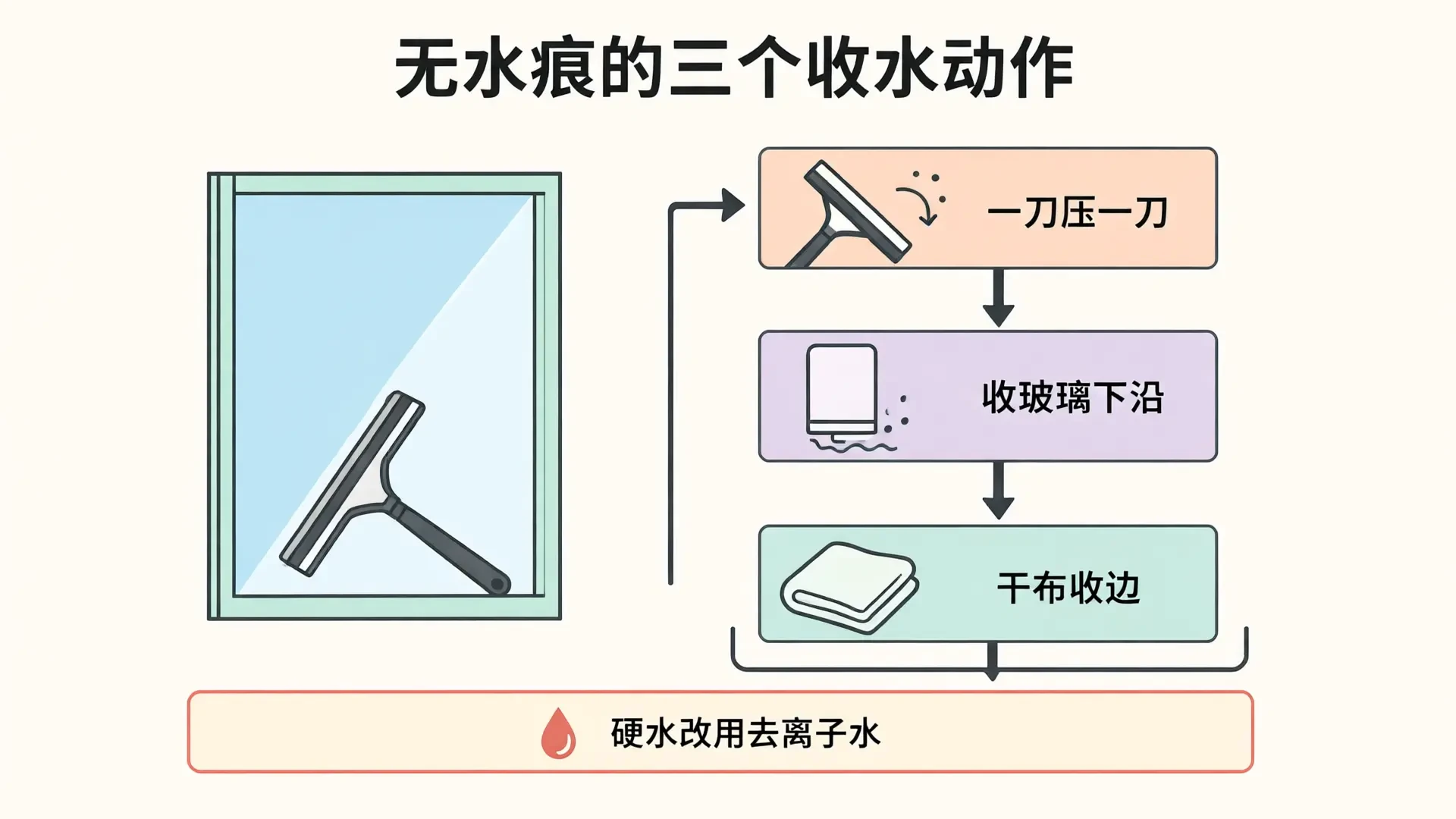
Environmental factors also affect results. Direct sunlight heats the glass surface, causing the cleaning solution to dry before it can be wiped away. Wind can blow debris onto freshly cleaned windows. In areas with hard water, use deionized water or add a small amount of neutral detergent to reduce surface tension.
The four-color zone system works here. Glass cleaning belongs to the green zone, using color-coded towels, squeegees, and cleaners kept separate from the red zone in restrooms. If limescale or soap scum from the restroom is transferred via towels onto glass, water stains turn into stubborn white spots. After implementing the four-color zone system, rework rates for glass dropped from 9% to 3%.
7. Scratch-Free Relies on Particle Management
Glass scratches almost always stem from one action: dry wiping with grit. Sand, cement spots, or paint specks dragged across the surface by a dry towel or scouring pad are hard enough to leave permanent marks.
The correct sequence is: rinse first to soften surface debris, then use a squeegee to remove large particles. Use a plastic scraper for cement spots and adhesive residue. For stubborn adhesives, apply neutral adhesive remover, let it sit for 5 minutes, then scrape off. Finally, proceed with standard cleaning. Do not use steel wool, the abrasive side of scouring pads, or dry towels on sandblasted glass.
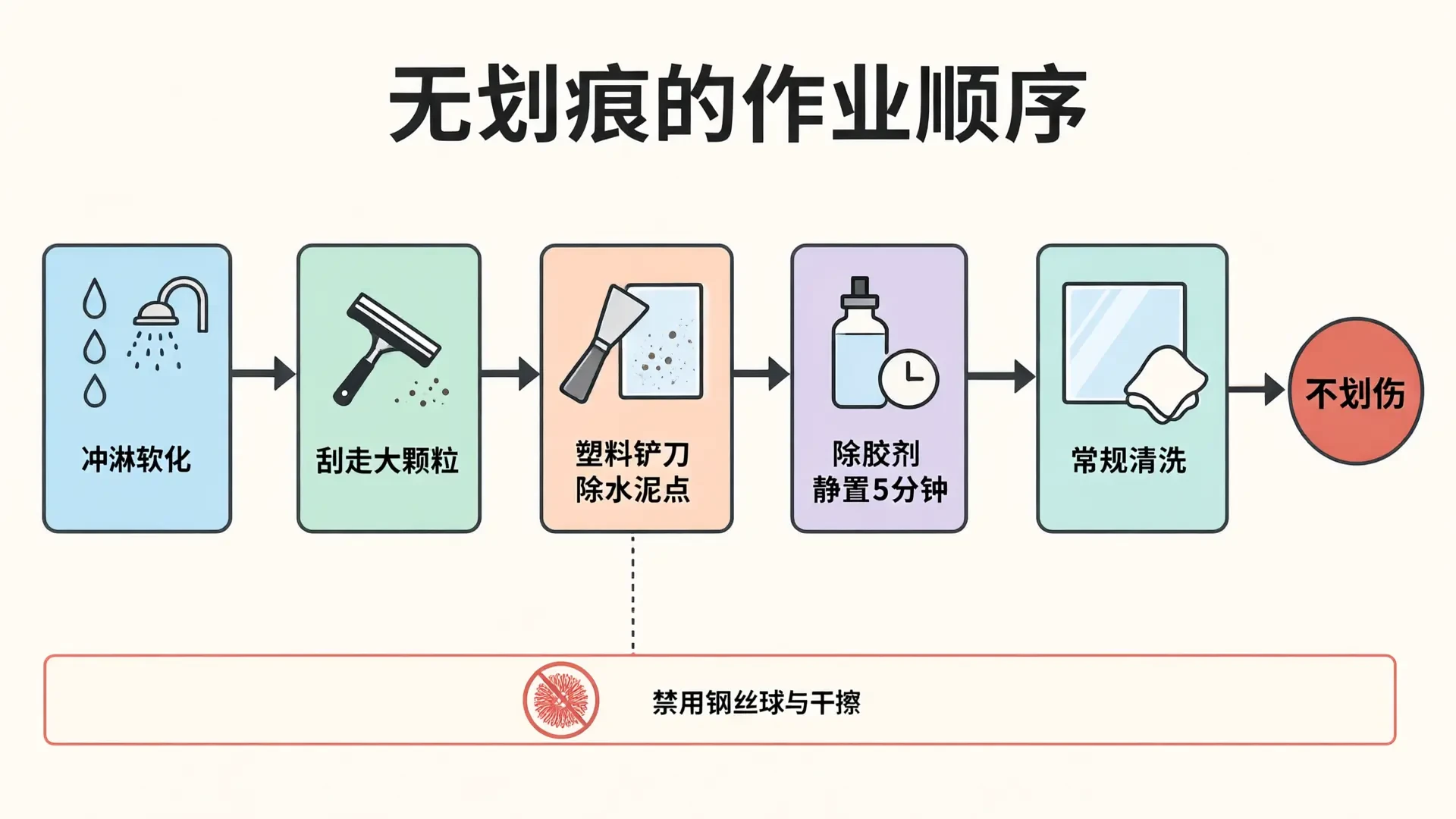
A 120 sq. ft., 3-bedroom unfinished unit in 2025, month 3, demonstrates the value of this workflow. The site had approximately 200 cement spots on window frames and adhesive residue on glass films, with a client requirement to complete work within one day without scratching glazed tiles. 3 cleaners finished in 7 hours using plastic scrapers to remove cement spots point-by-point, neutral adhesive remover for residue, followed by sign-off against a 12-point checklist. Settlement was at 10.5 yuan/sq. ft., totaling 1260 yuan, with 0 reworks required.
8. Five Clauses to Include in Your Quote for Acceptance
Most acceptance disputes are rooted before construction begins. Include these five items in your written quote to cover the vast majority of disagreements: 1) Measured values and methods for calculating expandable area; 2) Unit price, whether it includes both sides, window frames, sashes, and screens; 12 itemized list verification and signature; 3) Rework clause (free rework for failed inspections in the same area) and 7-day warranty; 4) Additional work and exclusions, including high-rise exterior windows, suspended platforms, special glass, and fogging inside insulated glass units.
Sign-off settlement follows acceptance, which is our standard process. From 2024 to 2025, 12 items triggered rework for 68 orders (1.8% of the total), completed within an average of 36 hours with no additional charges. This low rate confirms that acceptance standards are strictly enforced in practice, not just on paper.
9. A Reusable Verification Sequence
From entry to signature, verify glass cleaning in this order: confirm area and unit price first; photograph pre-existing scratches before work begins; during cleaning, ensure plastic scrapers and clean squeegees are used; after drying, check transparency at an angle; wipe window tracks with a tissue; inspect screens against backlight; finally, sign off on each item in the checklist.
The value of this sequence lies in breaking down the subjective judgment of "clean" into actions that can be verified by a third party. With this checklist, consumers don't need to understand cleaning formulas—they can easily determine if this service is worth 6 to 10 per square meter.
Price differences in glass cleaning stem from variations in area scope, service coverage, and contamination levels. Clearly define these three factors during the quoting phase. Then, verify each item listed for 12 glass panels with 3 specifications against the checklist at acceptance. This creates concrete criteria for water marks and scratches—enabling direct comparison, re-inspection, and rework when needed.
Key Data
- We'll break down the 3 glass window frame items from this acceptance checklist of 12 items, explain the verification steps for each, and clarify the expanded area basis of 6-10 yuan/m².
- A 120㎡ home may have a glass surface area of only 22㎡, or as much as 35㎡.
- 6-10 per sqm is a price range, not a fixed price.
- | Variable | Low-end (near ¥6/㎡) | High-end (near ¥10/㎡) |
About the Author
Lin Yu Service Standards Supervisor
- Senior Indoor Cleaning and Maintenance Specialist
- Pre-employment Training Instructor with 400+ hours of teaching experience
- Manage skill assessments for 26 cleaners
Responsible for cleaning workflows, detergent selection, and acceptance criteria for both residential and commercial services. Data sourced from our internal operations manual.
Data Definition:Price range and labor hours on this page are based on actual settlement records from YuanYou Cleaning during the same period, calculated by building area or actual hours worked. Excludes holiday surcharges and transportation fees exceeding 30 km. Final quote subject to written estimate after on-site inspection.Statistics Interval2024 to 12, 1-2025, samples from26Actual work records of registered cleaning staff.