Engineering cleaning and waste removal billed separately with no cap? Three-tier pricing model and change order avoidance in a 2000 sqm factory case study.
"Engineering cleaning: 6-10 CNY/㎡; waste removal billed separately." Using a 2000㎡ factory as an example, this guide explains the risk allocation across three contract wording options for waste removal, demonstrates how a three-stage pricing method breaks down uncertain volumes into verifiable line items, and outlines five actions for clients to prevent scope creep.
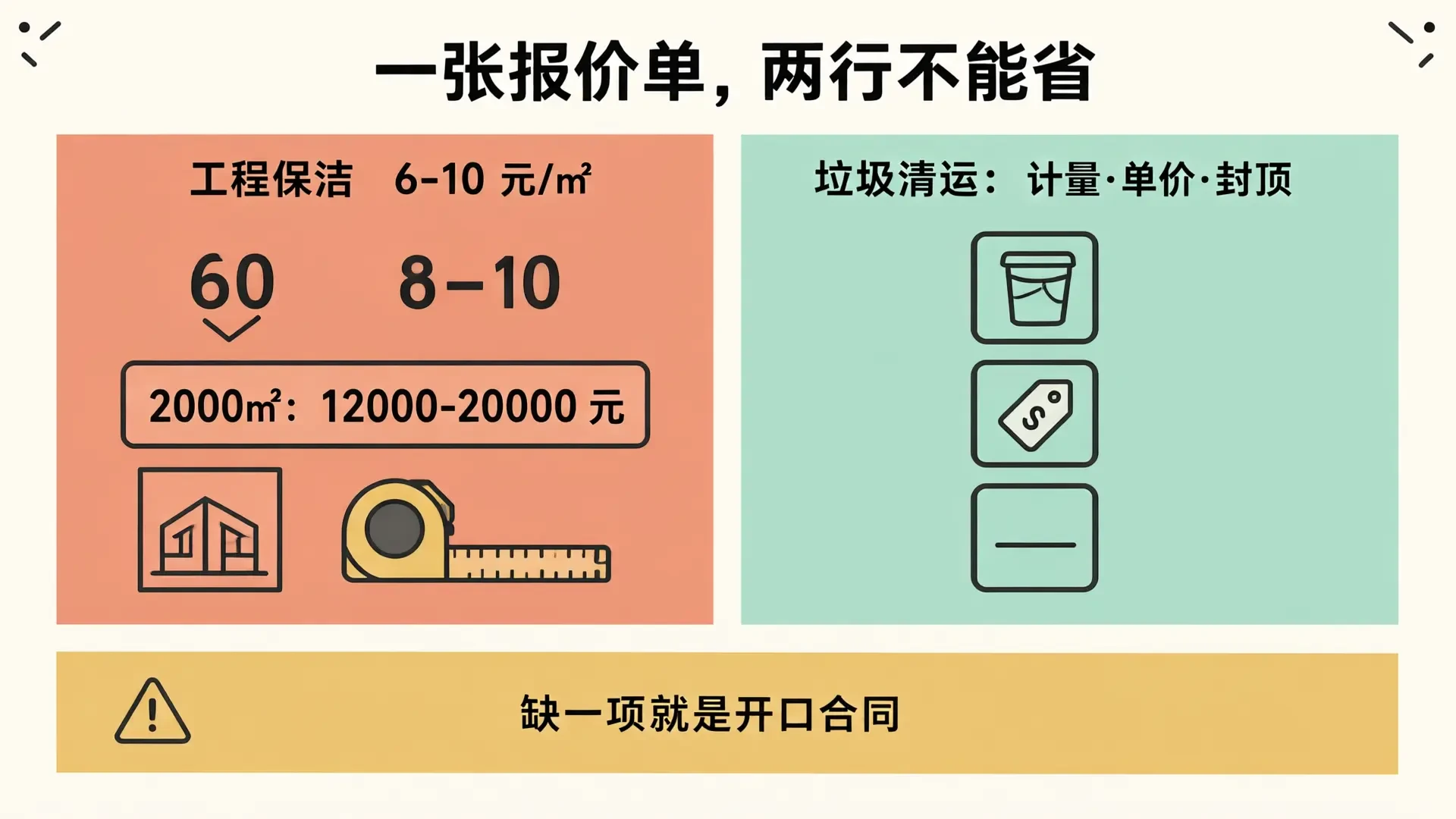
The line most often skipped on quotes is usually where the biggest cost discrepancy appears at settlement. "General cleaning: 6-10 USD/sq.m., waste removal billed separately." The first part has a unit price, but the second lacks clear boundaries. For a 2000 sq.m. facility, general cleaning falls within the 12000-20000 USD range; how much waste removal adds depends entirely on what follows "billed separately."
Our assessment is that listing waste removal as a separate item is reasonable, but having no upper limit is not.
"Not a problem is 'calculated separately,' but 'no limit' is."
Construction cleaning waste is on a different scale than residential cleaning. Home renovation debris consists mainly of cardboard boxes, protective films, and small cement chunks. Factory projects are far more complex: demolition produces masonry blocks and mortar; equipment packaging includes wooden crates; piping insulation, scrap cables, and ground coating residue from scraping are common. Additionally, leftover formwork and offcuts from contractors may remain.
These volumes cannot be estimated from floor area alone. Two 2000㎡ factories of the same size can generate vastly different waste quantities—one vacant and awaiting lease, the other fully equipped with machinery. Factors such as building height, presence of freight elevators, distance to loading points, and whether bags must be manually carried down all significantly impact labor and trucking costs. Asking suppliers for a fixed lump-sum price over the phone typically results in one of two outcomes: either they quote a high-risk contingency fee upfront, or they request additional charges at settlement based on actual usage.
There are three common approaches for waste removal in contracts. A lump-sum price shifts all risk to the supplier, who typically adds a 30%+ contingency to their quote, resulting in uncertain costs for the client. Actual cost settlement transfers risk to the client; since trip records are kept solely by the supplier, verification is difficult. The hybrid approach—capped pricing with actual cost settlement—is a compromise: an upper limit is set based on site surveys. If actual costs stay within this cap, they are settled as incurred; any excess requires written approval. Among these, only the third option effectively constrains both parties.
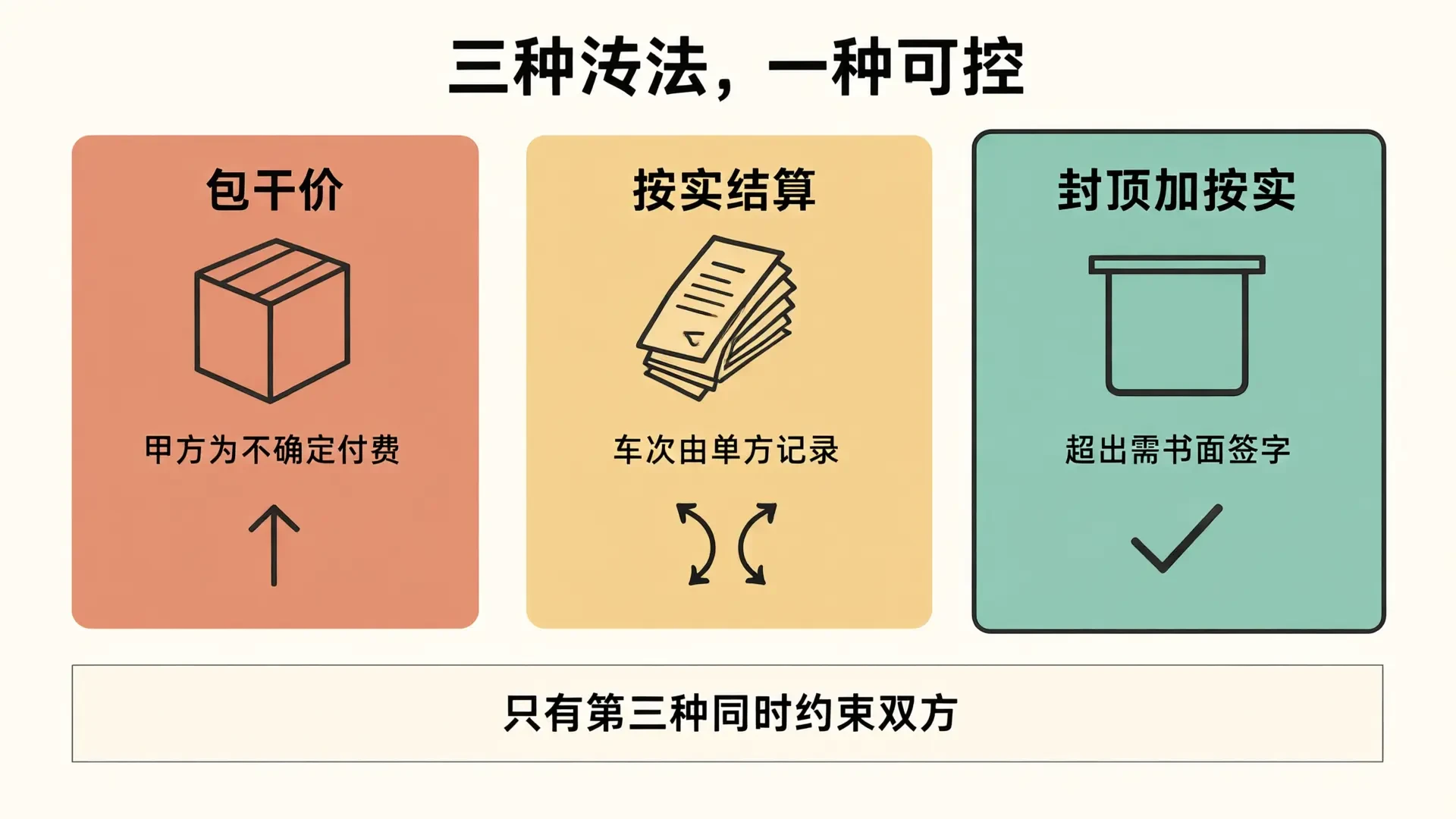
A proper format lists each item separately with three key elements: unit of measure, unit price, and cap amount. Missing any one of these turns the clause into an open-ended contract.
Three-Stage Quoting: Break down uncertain items into verifiable line items.
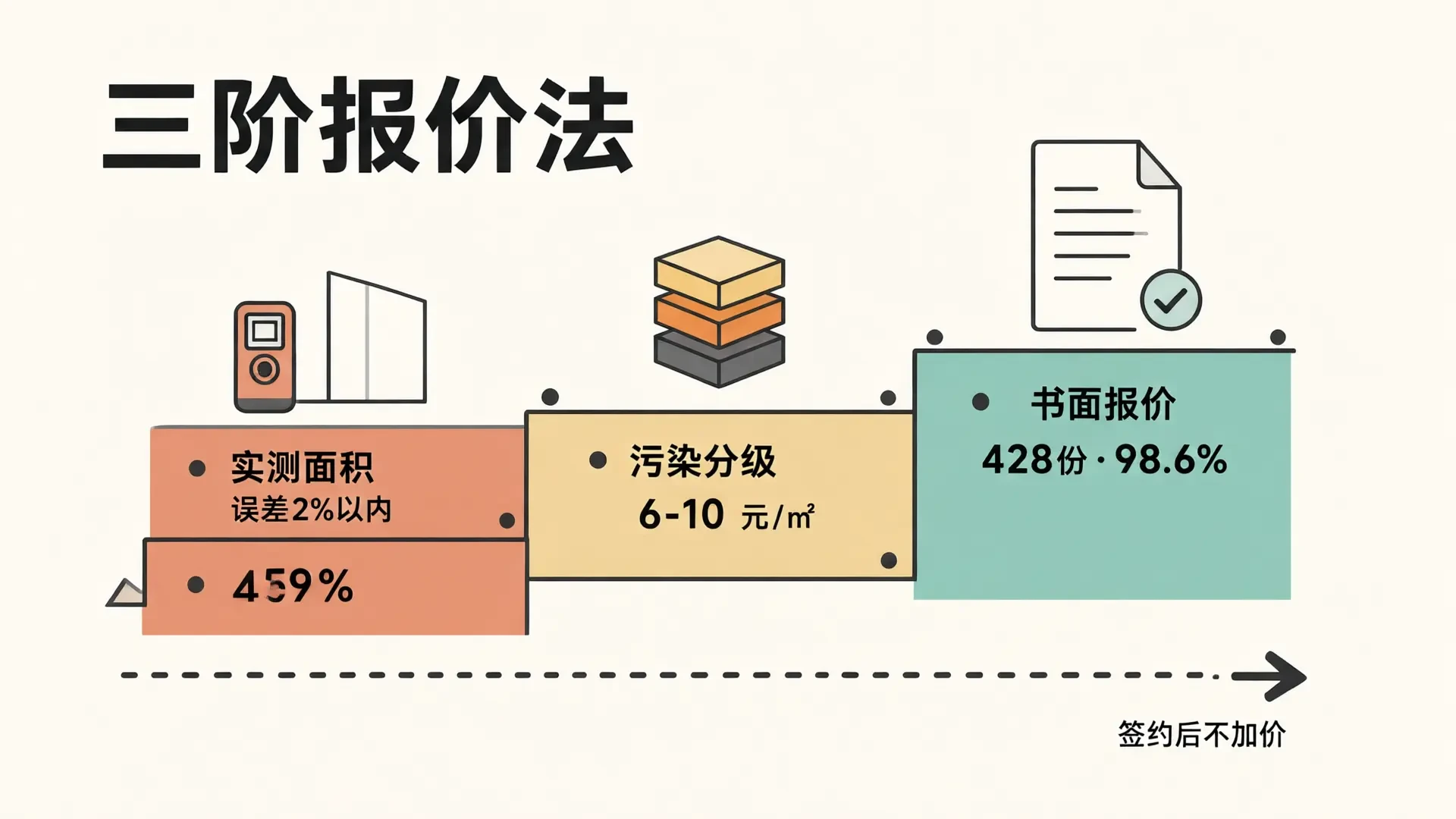
We break down engineering quotes into three steps—this is the origin of the term "Three-Stage Quoting Method."
Level 1: Measured Area. Commercial and engineering projects include free on-site visits where laser distance meters are used to verify each room individually, keeping errors within 2%. The area shown on drawings often differs from the actual workable space. Columns, equipment foundations, and mezzanines reduce cleanable areas. Signing contracts based on drawing areas simply shifts the error to the settlement stage.
The second tier is pollution classification. The unit price range for engineering cleaning is 6–10 CNY/m². The price difference stems from on-site conditions, not negotiation leverage. Unfinished handovers involve wall putty residue, cement spots, and window frame adhesive marks, while fully furnished handovers feature surface dust and residual protective film glue; these differences require distinct processes and materials. Heavy-duty floor issues—such as old coatings, oil buildup, or dense paint splatter—push the unit price toward the upper end of the range. Classification criteria are documented in the quotation, ensuring both parties base pricing on the same site assessment.
Level 3 is the written quote. The quote lists area, unit price, headcount, estimated hours, add-ons, and exclusions; waste removal appears as a separate line item with no price increase after signing. In 2025 year(s), we issued 428 written quotes; 98.6% were settled at the original price. Variances occurred mainly when the client expanded the work scope or changed the schedule mid-project, documented via written change orders.
What does a quote for a 2000㎡ factory look like?
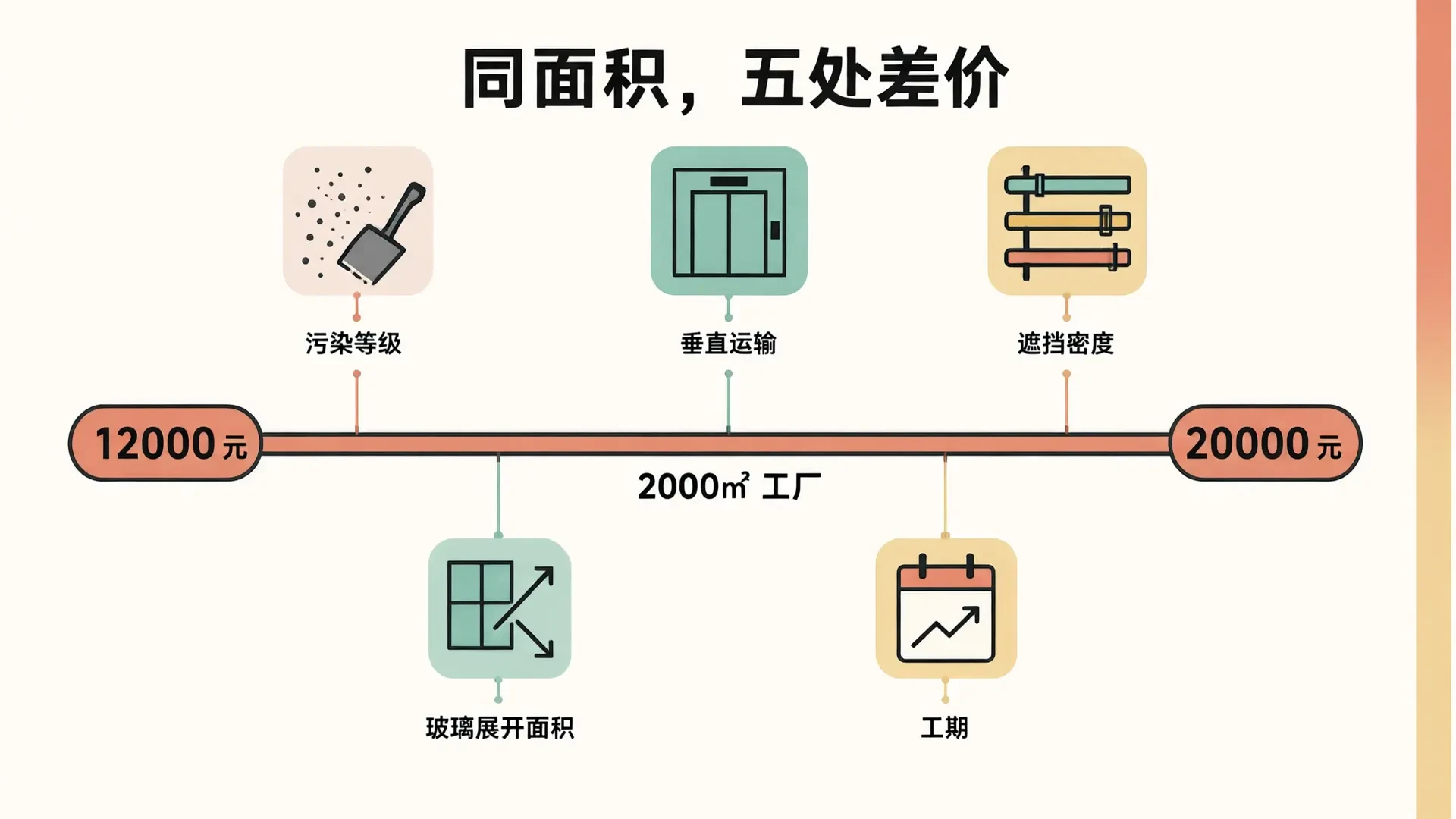
Using a 2000㎡ facility as an example, at 6-10 CNY/㎡, the base engineering cleaning cost is 12000-20000 CNY. For the same area, costs vary across five key factors: pollution levels (removing cement spots and glue residues from unfinished surfaces requires manual scraping and chemical treatment per spot); vertical transport conditions (the presence of freight elevators directly impacts labor for moving waste and water); obstruction density (pipes, racks, and equipment foundations increase routing time and protective coverage needs); glass area (frame and skylight areas are calculated by expanded surface area, potentially doubling between facilities); and schedule (compressed timelines require additional staff, raising peak labor demand).
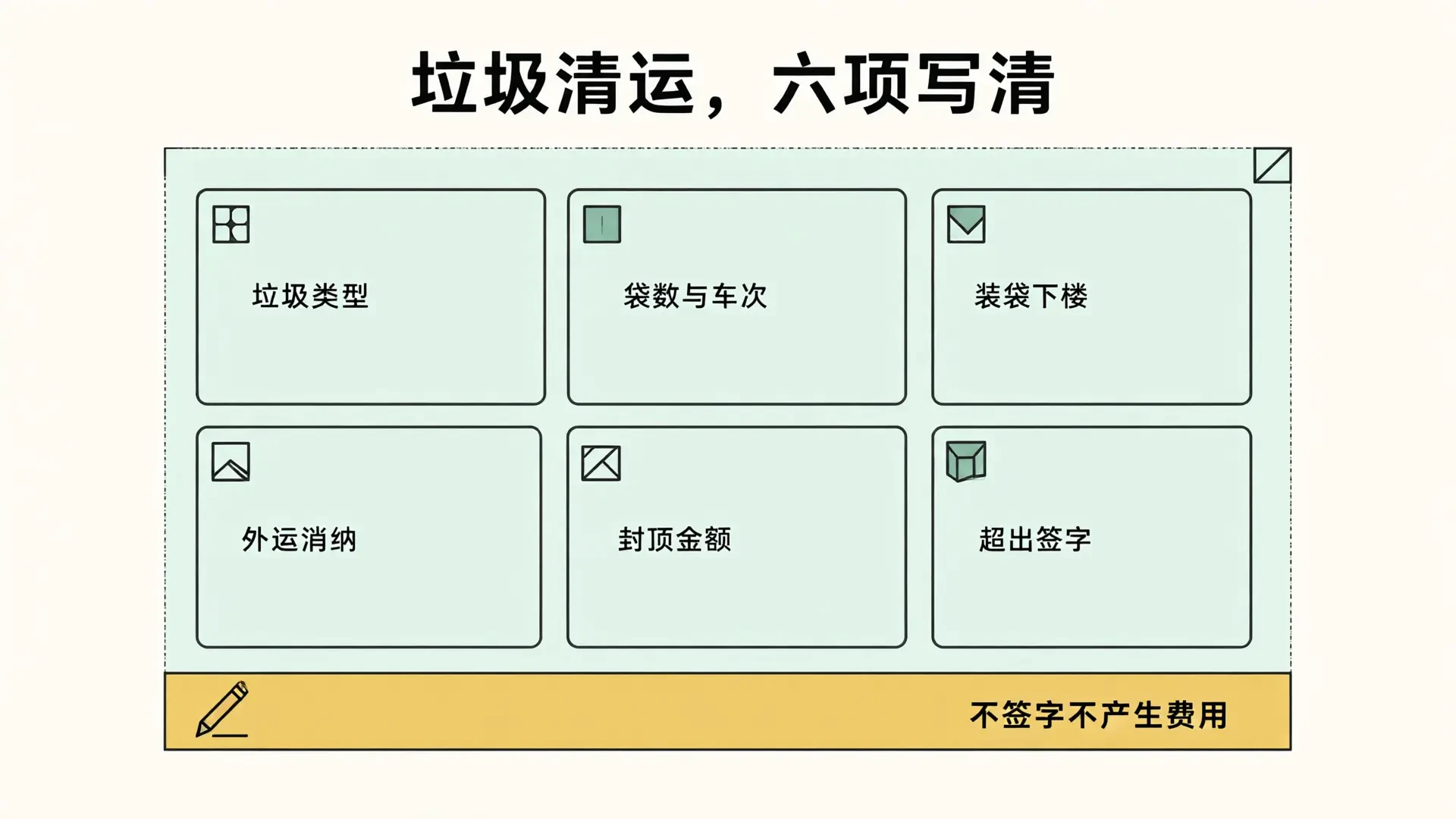
Waste Removal: Clearly specify the following six items: (1) Waste type and separate handling for construction debris, packaging materials, and general solid waste; (2) Estimated number of bags and truck trips; (3) Bagging and stair-down fees; (4) Hauling and disposal fees; (5) Cap amount; (6) Confirmation process for costs exceeding the cap. The cap amount is calculated based on on-site volume measurements and floor conditions. Any charges beyond the cap require written confirmation by the Client's representative at the site; no work proceeds or fees are incurred without such approval.
Exclusions must also be clearly stated. Hazardous waste, chemical residues, dismantling of large equipment, and landscaping soil removal are outside the scope of standard engineering cleaning. These items require specific disposal qualifications and channels; including them under the generic term "waste removal" will create complications for both parties during settlement.
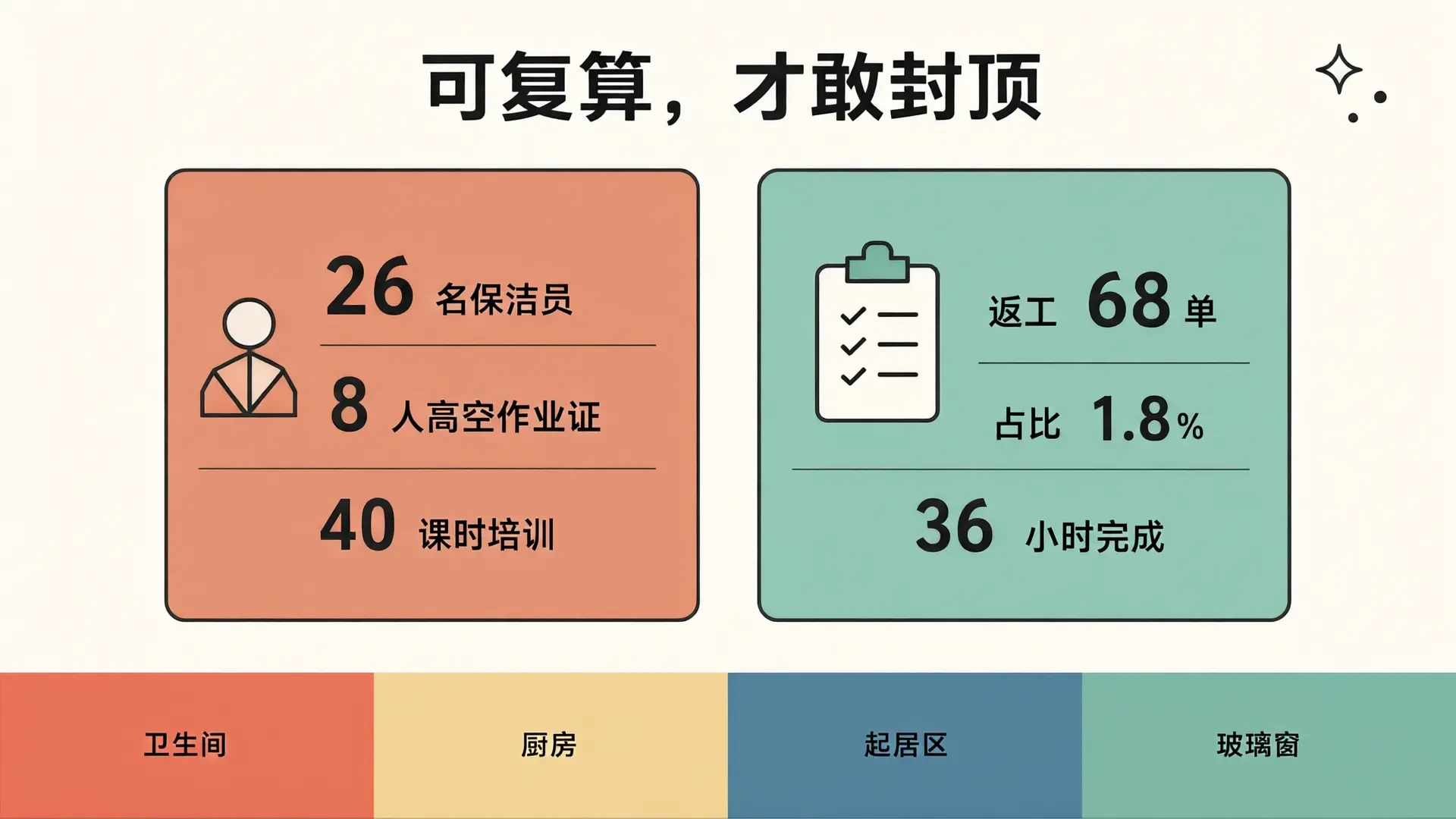
Complete acceptance for 12 items: 5 kitchen and bathroom, 3 glass window frames, 4 floor and wall corners. After verifying each item, the customer signs to finalize settlement. Between 2024 and 2025 years, 68 rework orders are triggered (representing 1.8% of total), with an average completion time of 36 hours at no additional cost.
Finalize payment by reconciling four documents: written quote, signed change order, waste removal trip log, and 12 acceptance form. When the area, headcount, and trip counts across all four documents match, there is no room for dispute on the final amount.
5 Actions for Clients to Avoid Change Orders
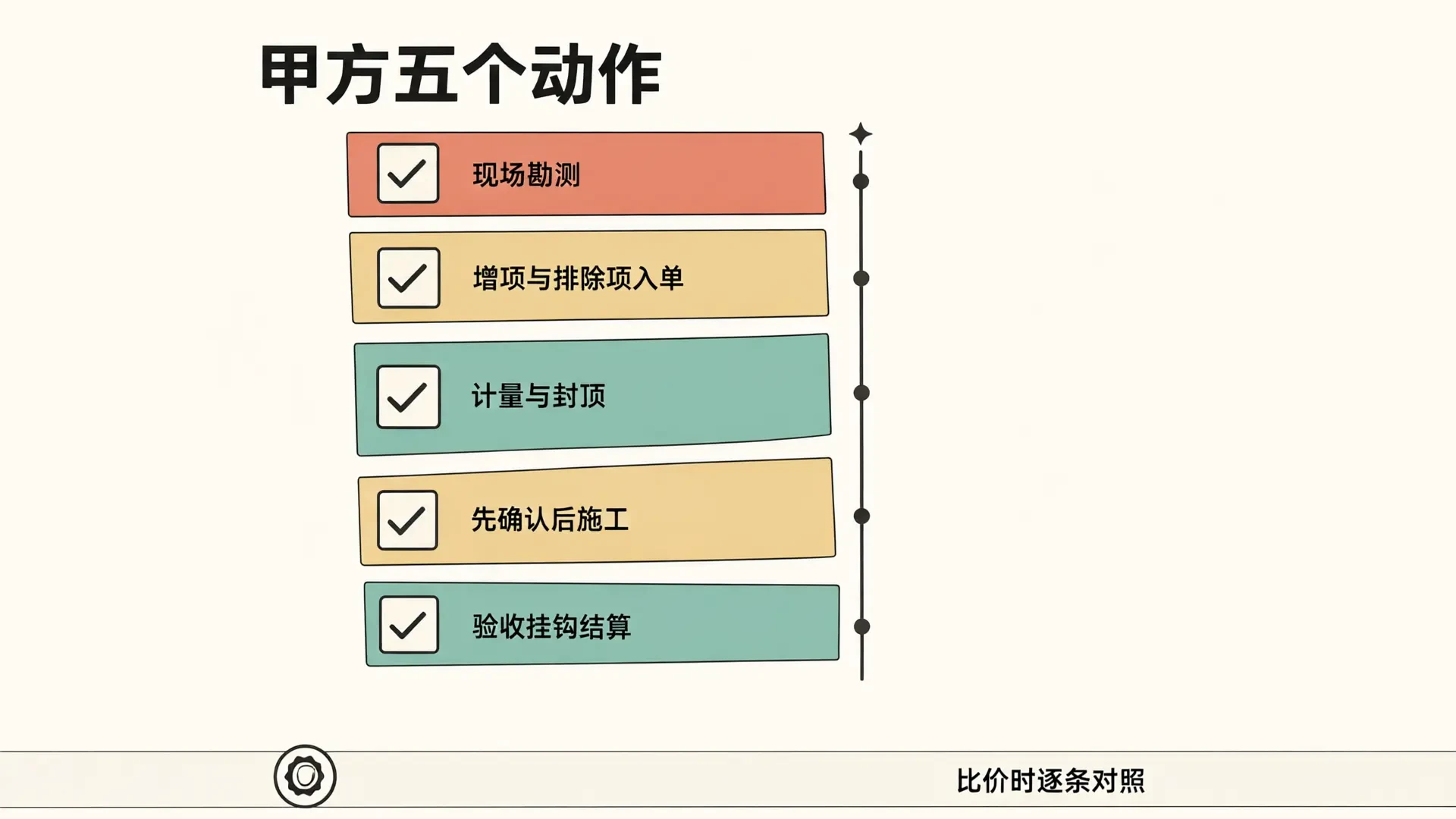
First, insist on on-site inspections. The gap between phone estimates and on-site quotes typically stems from two areas: waste volume and contamination level—both of which are high-risk zones for change orders.
Second, the quote must include add-ons and exclusions. A quote showing only the total price effectively reserves the right of interpretation until settlement day.
Third, waste removal must include a defined unit of measurement and a cap. Units such as bags, trucks, or tons are acceptable, provided they can be verified on-site.
Fourth, confirm all scope additions before starting work. Any verbal agreement to "do it first and settle the cost later" will leave the client with no room for negotiation at settlement.
5. Tie acceptance to payment. Sign off on each line item; areas that fail inspection will be reworked at no cost, and the final payment will be released only after completion of the rework.
Why we dare to cap our pricing
This is tied to our team structure. All 26 registered cleaners are certified, with 8 holding high-altitude work permits and completing 40 hours of pre-job training. On-site operations use a four-color zoning system: red, yellow, blue, and green tools and cleaning agents are strictly assigned to restrooms, kitchens, living areas, and windows, respectively. Work proceeds in one direction only—tools never cross zones, and processes never backtrack. In household settings, this method reduced cross-contamination rates from 17% to 2% and glass rework rates from 9% to 3%. The same zoning logic applies to larger-scale engineering projects.
Another reason the quote is capped is that the process is fully recalculable: after online booking, we call back within 2 hours to confirm area and time, conduct an on-site survey to provide a written quote, perform standard construction, and settle payment after 12 acceptance checks. Every step includes deliverables, ensuring any additional items are justified.
Engineering cleaning quotes don't need to look fancy; they must be easy to recalculate. Transparent pricing isn't about making unit prices larger—it's about fully detailing every "additional charge" line item. To assess a quote's credibility, check the waste removal section: does it include measurement units, a maximum cap, and exclusions? When all three are present, "additional charges" become a clear line item, not an unknown variable. YuanYou Cleaning offers free on-site inspections and written quotes. Call 17821788357.
Key Data
- General cleaning: 6-10 CNY/sq.m. Garbage removal billed separately.
- Factory of 2000㎡. Basic engineering cleaning costs range from 12000 to 20000 yuan. Additional garbage removal fees vary based on the "separate calculation" terms.
- A 2000㎡ facility may generate vastly different waste volumes depending on whether it's vacant or fully equipped with machinery.
- Free on-site visits for commercial and engineering projects. We verify each room individually with laser distance meters, ensuring errors stay within 2%.
About the Author
Zhao Qiang Aerial Work Team Leader
- Work at Heights Certificate (Special Operation)
- Aerial work platform operation 9 years
- On-site Supervisor for Exterior Cleaning Project: 60+
Responsible for on-site safety management and labor hour estimation for exterior wall cleaning and engineering janitorial services. This section of the safety guidelines has been reviewed by them.
Data Definition:Price range and labor hours on this page are based on actual settlement records from YuanYou Cleaning during the same period, calculated by building area or actual hours worked. Excludes holiday surcharges and transportation fees exceeding 30 km. Final quote subject to written estimate after on-site inspection.Statistics Interval2024 to 12, 1-2025, samples from26Actual work records of registered cleaning staff.