How the 4-color zone method reduces cross-contamination to 2% during initial cleaning of 120㎡ spaces
Cross-contamination of tools is a hidden cost in deep cleaning. The four-color zone method uses color-coded tools to block contamination paths, reducing cross-contamination rates from 11% to 2% based on actual measurements. Using a 120㎡ unfinished apartment as a case study, this article breaks down the sequence of zone-based operations, material protection logic, and the quality control loop for 12 inspection checklist items.
The most overlooked risk in initial deep cleaning isn't excessive dust or stubborn cement residue—it's cross-contamination from tools. A single cloth moving from the kitchen to the bathroom spreads grease and bacteria; a sponge wiping window frames then countertops transfers adhesive residue and dust. These issues often surface after move-in, but the root cause lies during the cleaning phase itself.
Before Yuyou Cleaning fully implemented the four-color zone system in 2024, internal spot checks showed a cross-contamination rate of approximately 11%. One year after implementation, this figure dropped to 2%, and the first-time acceptance pass rate increased from 89% to 96.4%. The core logic is straightforward: use color to distinguish zones, constrain tools by zone, and cut off contamination pathways with those tools.
Why Cross-Contamination Is a Hidden Cost in Initial Cleaning
Initial cleaning targets the raw site after renovation. Challenges include splattered cement and mortar, residual glass protective film, adhered putty dust, and paint drips—diverse pollutants scattered across surfaces. Cleaners must handle multiple material types quickly; without segregated tools, cross-contamination is almost inevitable.
Consider a specific scenario: A cleaner uses the same cloth to wipe grease from a kitchen stove and then cleans a bathroom sink. Kitchen oil transfers onto the bathroom ceramic, forming an invisible film. This residue makes water spots harder to remove, leading guests to repeatedly complain, "It never gets clean."
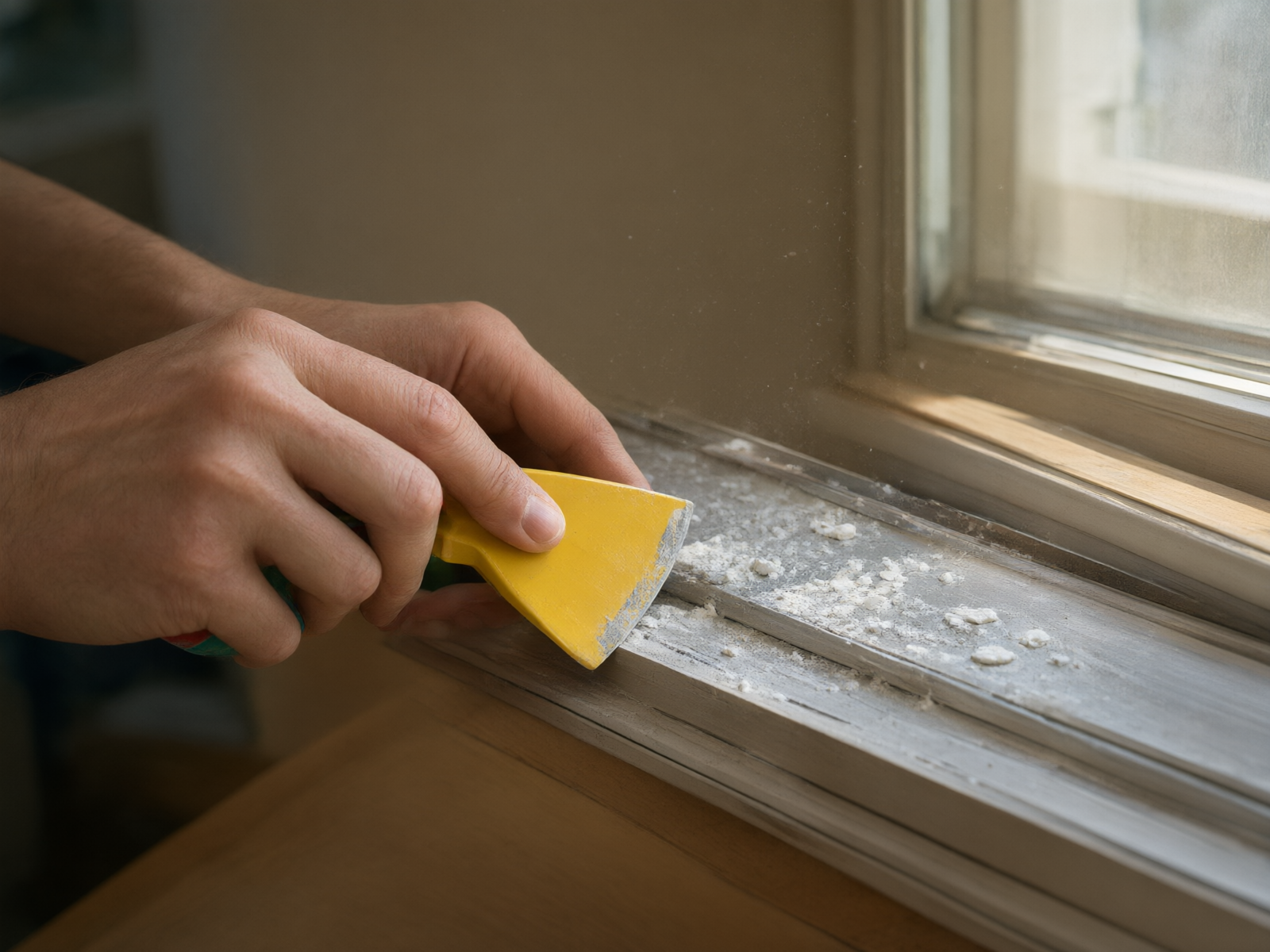
Another common issue is the secondary transfer of silicone residue. During renovation, silicone sealant is applied to window frames and countertop edges for sealing. If the same scraper is used across different areas during cleaning, silicone debris can be transferred to other surfaces, drying there to form new stains.
These issues share a common pattern: they go unnoticed during construction, are difficult to trace during acceptance, and recur after occupancy. The solution is not to increase cleaning frequency, but to block the contamination path at its source.
Design logic of the four-color zoning method
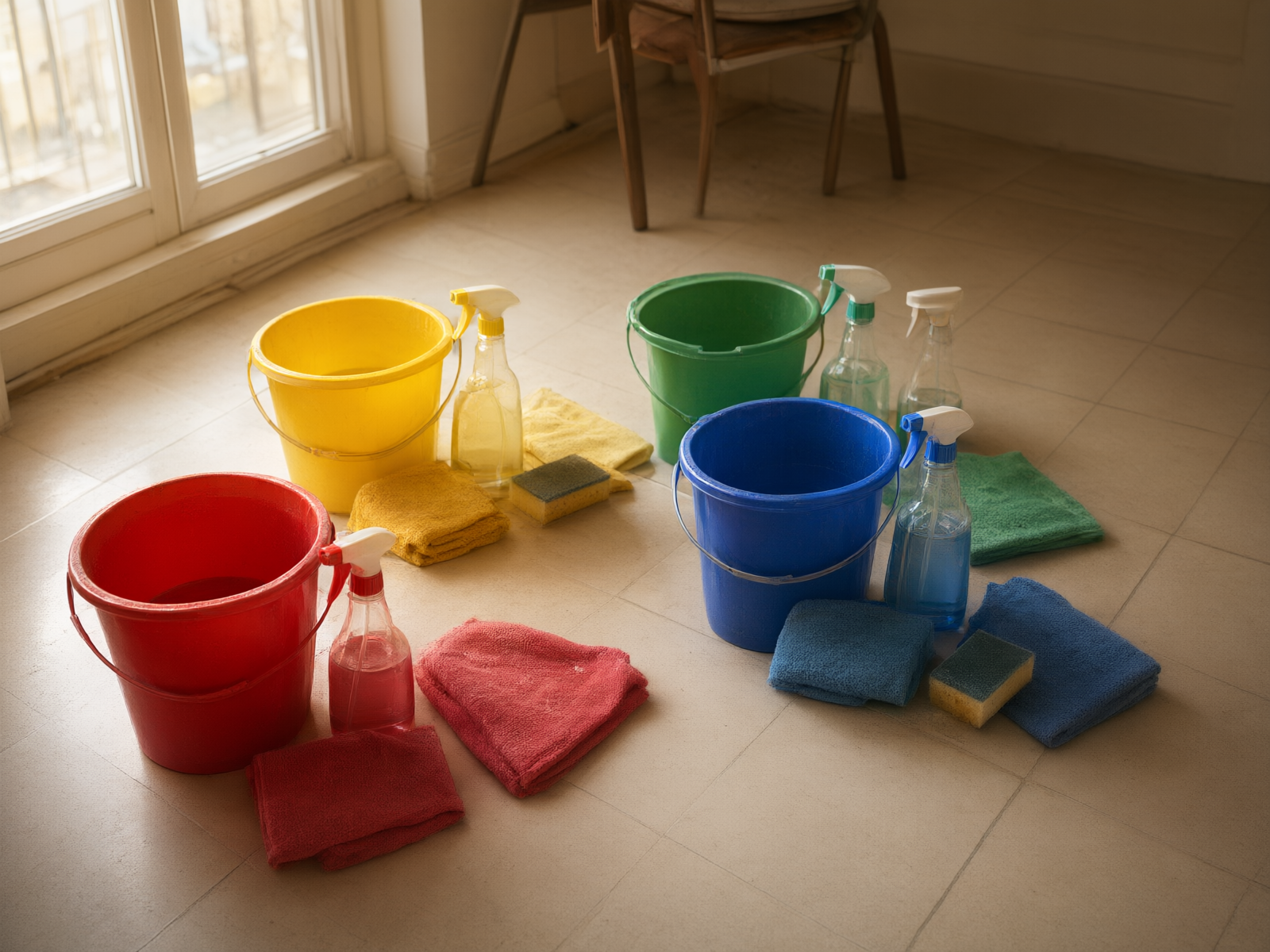
The four-color zone method divides residential spaces into four work areas, each assigned a dedicated set of color-coded tools and supplies.
Use the red tool kit (red cloth, red sponge, red bucket) in the bathroom. Use the yellow tool kit in the kitchen. Use the blue tool kit in living areas such as the living room and bedrooms. Use the green tool kit for glass and window frames.
Color coding establishes visual constraints. When cleaning staff see a red tool, they know it belongs only in the restroom. If a red cloth appears in the kitchen, anyone can immediately spot the violation. This visual management approach is far more effective than verbal rules because it shifts the standard from memory to color matching.
The zoning design is based on differences in pollutant types. The bathroom zone targets limescale, soap scum, and mold; the kitchen zone deals with grease and food residue; the living area handles dust and construction debris; and the glass zone addresses adhesive marks and paint spots. Since these four pollutant categories have distinct chemical properties, they require different cleaning agents and physical treatment methods. Using tools interchangeably not only transfers contaminants but can also trigger chemical reactions between cleaners, potentially damaging surface materials.
120㎡ Unfinished Home: How to Implement Zoning
Taking Yuan You Cleaning's recent deep-cleaning project of a 120 sqm unfinished three-bedroom apartment as an example, here is the step-by-step process for implementing the four-color zoning method.
During the site inspection, the cleaning team identified approximately 200 cement spots remaining on the wall frames, adhesive residue from protective film on the glass surfaces, and putty dust with minor paint drips on the glazed floor tiles. The client requires completion within one day without scratching the glazed tiles. The team submitted a written quote: unit price of 10.5 CNY/㎡, total cost of 1260 CNY, with an estimated workforce of 3 personnel working for 7 hours.
Before starting, the team prepared four color-coded tool sets using the four-color zoning method: Red set at the bathroom entrance, Yellow at the kitchen entry, Blue in the living room center, and Green at the window work area. Each set includes a cloth, sponge, bucket, scraper, and cleaner—all marked by color.
Job sequence is critical. The team started in the least contaminated areas and progressively moved toward the most contaminated zones. First, they addressed the glass and window frame areas using the green tool kit with plastic scrapers to remove cement spots. Plastic scrapers were selected specifically: steel wool would scratch the glazed tiles and glass surfaces, whereas plastic scrapers are hard enough to remove cement without damaging the substrate.
Next, clean dust and debris in the living area using the blue tool kit. Then tackle kitchen grease and construction residue with the yellow tool kit. Finally, clean the bathroom using the red tool kit. This order is chosen because the bathroom is a more enclosed space; cleaning it first would allow dust from other areas to settle back inside, causing secondary contamination.
Neutral adhesive remover was used for residue removal. The neutral formula is chosen based on material protection logic: acidic or alkaline removers may corrode aluminum alloy window frames and glass coatings, whereas the neutral formula dissolves silicone without damaging the substrate.
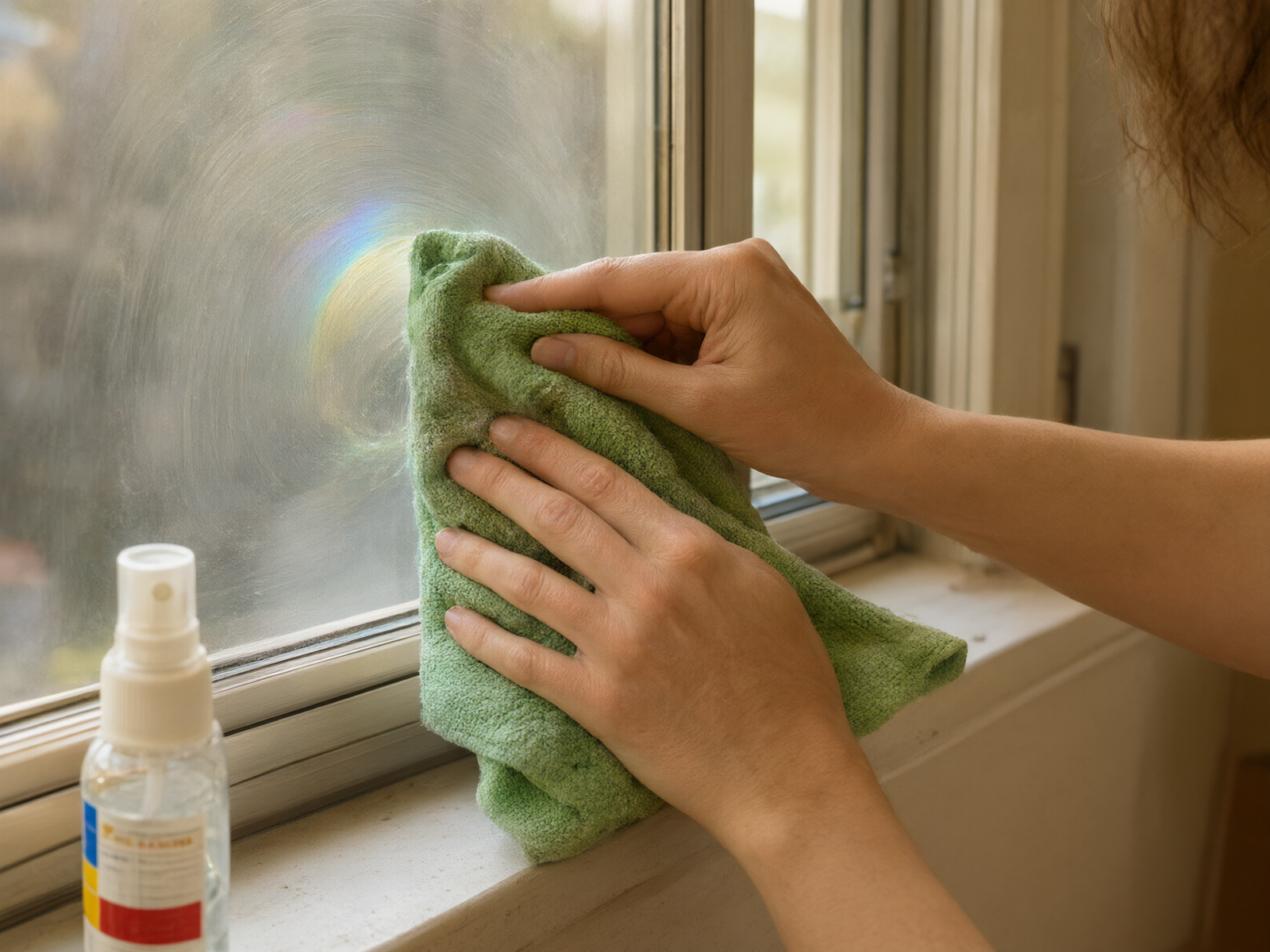
Throughout the workflow, each of the four tool sets remains confined to its designated area. When a cleaner moves to a new zone, they must switch to the corresponding color-coded tool set. While this rule may appear to add steps, it actually reduces rework: since tools are not mixed, each area requires only one cleaning pass.
Data Validation: Actual Effect of Partitioning
This 120㎡ project's settlement data speaks volumes. 3 certified cleaners completed all tasks in 7 hours with only 0 reworks. All 12 items on the acceptance checklist were verified and passed. The client signed off immediately, confirming a total of 1260 yuan—exactly matching the written quote.
From a macro perspective, YuYou Cleaning triggered 68 rework orders between 2024 and 2025, accounting for 1.8% of all orders. These were completed within an average of 36 hours with no additional fees. This rework rate is significantly lower than the industry average, largely due to our four-color zoning system.
A reduction in cross-contamination rate from 11% to 2% means rework caused by tool misuse drops from approximately 11 orders to 2 per every 100 orders. For cleaning services billed by area or labor hours, minimizing rework directly lowers labor costs while boosting customer satisfaction.
How to use the 12-item acceptance checklist with partitioning
The four-color zoning method addresses quality control during construction, while the 12 inspection checklist ensures result verifiability. Together, they form a complete quality loop from process to outcome.
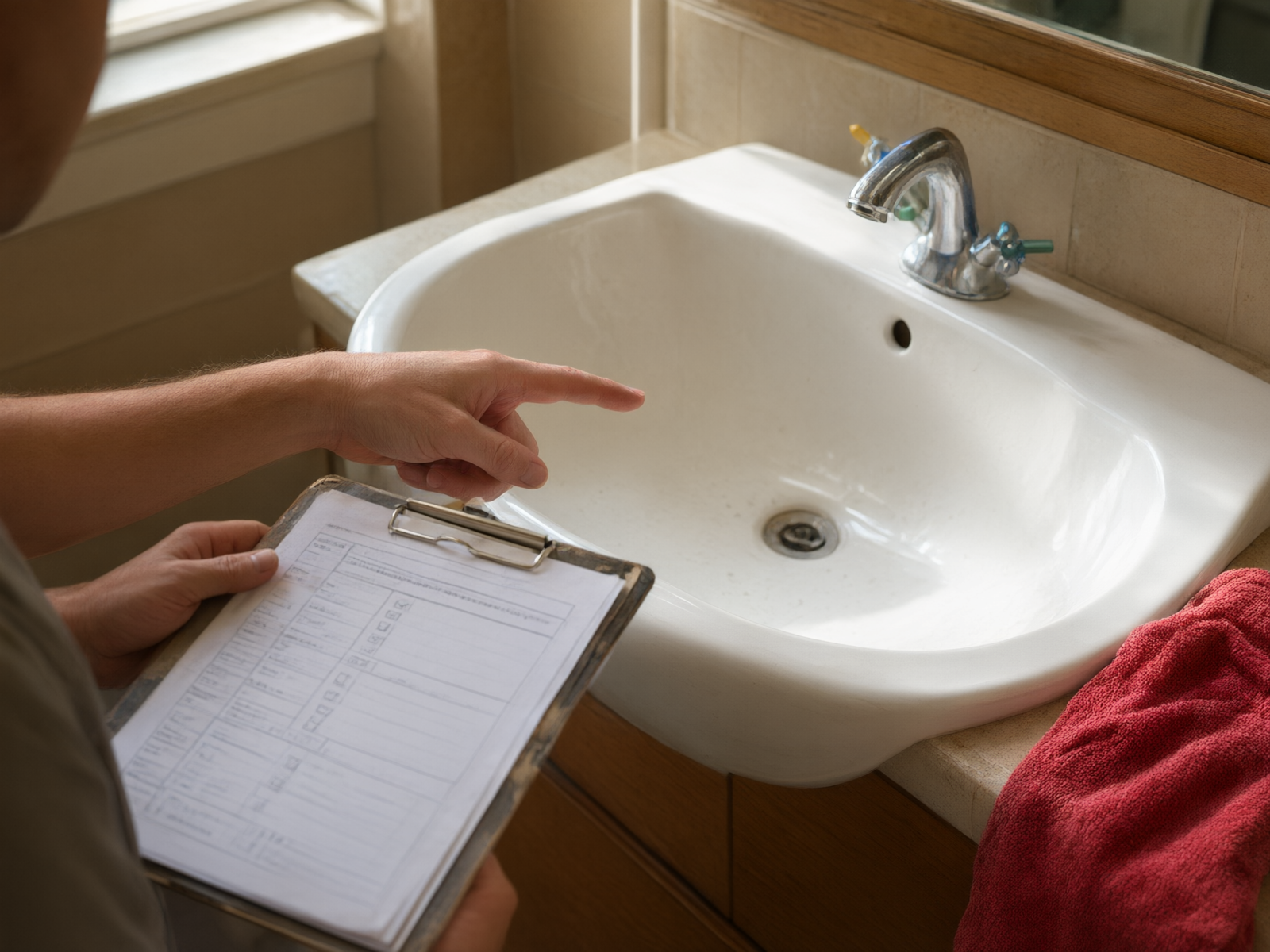
The acceptance checklist covers three dimensions: Kitchen and Bathrooms (5 items), including no oil film on stovetops, no limescale in sinks, and no residue on ceramic fixtures. Glass Windows (3 items), including no adhesive marks on glass, no cement spots on window frames, and no damaged seals. Floors and Corners (4 items), including no scratches on floors, no dust accumulation in corners, no stains on baseboards, and no residue in tile grout lines.
In this 120㎡ case, we verified the 12-item checklist line by line during acceptance. Because strict zoning was enforced during construction, cleaning quality in each area was guaranteed, the acceptance process went smoothly, and no rework was required.
This process-control-plus-result-verification approach is the foundation of Yoyou Cleaning's free rework guarantee. If a zone fails inspection, we will return at no cost within 7 days for rectification—a promise backed by both our zoning method and inspection checklist.
From Methodology to Service Standards
The four-zone method is not a personal experience of individual cleaners; it is a standardized workflow validated by data. Yuanyou Cleaning's 26 registered cleaners undergo 40 hours of pre-job training, with 8 holding high-altitude work certification. Training covers zone operation standards, tool identification, work sequencing, and acceptance criteria.
When hiring initial cleaning services, consumers should look for two key signals: First, does the company have clear zoning protocols instead of relying on individual cleaners' experience? Second, are there quantifiable acceptance criteria rather than vague standards like "looks clean enough"?
YuanYou Cleaning's initial deep cleaning is priced by area, starting at 7 CNY/sqm. Final pricing is determined via a three-stage quotation method: measured area, contamination level, and written quote. Commercial projects include free laser distance measurement with accuracy within 2%. No price increases after signing; we'll call back within 2 hours of your appointment. Like our four-color zoning system, these commitments turn uncertain service processes into verifiable, standardized workflows.
Key Data
- Before Yuyou Cleaning fully implemented the four-color zoning system in 2024, the internal spot-check cross-contamination rate was approximately 11%.
- After one year of implementation, this figure dropped to 2%, and the first-time pass rate increased from 89% to 96.4%.
- Using Yuyou Cleaning's recently completed deep-cleaning project for an unfinished 120 sqm three-bedroom apartment as an example, here is the step-by-step process for implementing the four-color zoning method.
- Team provided a written quote: Unit price 10.5 CNY/sqm, Total 1260 CNY, Estimated 3 personnel for 7 hours.
About the Author
Lin Yu Service Standards Supervisor
- Senior Indoor Cleaning and Maintenance Specialist
- Pre-employment Training Instructor with 400+ hours of teaching experience
- Manage skill assessments for 26 cleaners
Responsible for cleaning workflows, detergent selection, and acceptance criteria for both residential and commercial services. Data sourced from our internal operations manual.
Data Definition:Price range and labor hours on this page are based on actual settlement records from YuanYou Cleaning during the same period, calculated by building area or actual hours worked. Excludes holiday surcharges and transportation fees exceeding 30 km. Final quote subject to written estimate after on-site inspection.Statistics Interval2024 to 12, 1-2025, samples from26Actual work records of registered cleaning staff.